EN
EN



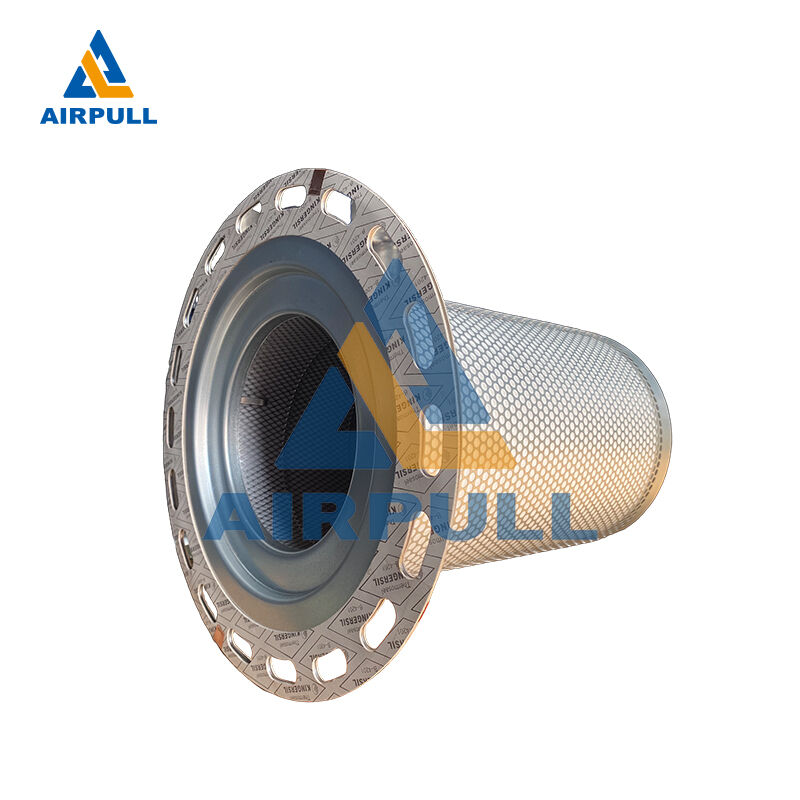
Choosing the best oil separator for your air compressor system is one of the most consequential maintenance decisions a facility manager or procurement engineer can make. The oil separator sits at the heart of rotary screw compressor performance, responsible for removing entrained oil from compressed air before it enters downstream equipment, processes, or distribution lines. A poor selection leads to excessive oil carryover, increased operating costs, accelerated component wear, and potential product contamination — outcomes that no operation can afford to ignore.
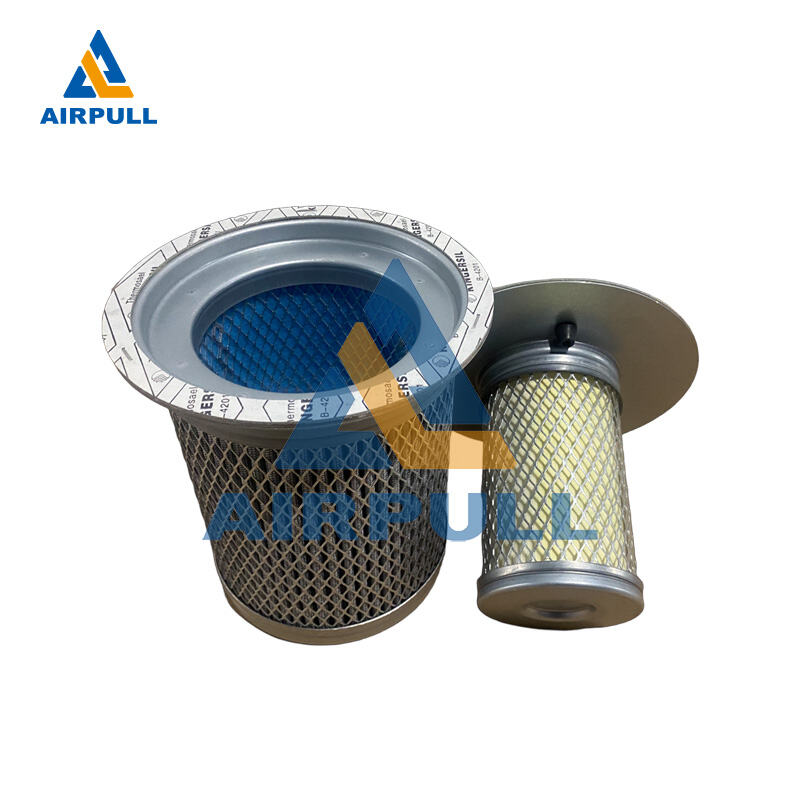
Understanding how to evaluate and select the best oil separator requires more than simply matching a part number or choosing the lowest-priced option available. It demands a clear grasp of your system's operating parameters, air quality requirements, compressor design specifications, and long-term cost of ownership. This guide walks through the critical selection factors that industrial buyers and maintenance professionals must consider to make a confident, informed decision.
Understanding What an Oil Separator Does in a Compressed Air System
The Role of the Oil Separator in Rotary Screw Compressors
In a rotary screw air compressor, lubricating oil is injected directly into the compression chamber to cool the rotors, lubricate moving surfaces, and create an effective seal between the male and female rotor profiles. This process is highly efficient, but it means that a significant volume of oil becomes entrained within the compressed air stream as fine aerosols and mist. Without effective separation, this oil would pass directly into the distribution network, contaminating tools, pneumatic controls, spray applications, and in critical industries, even final products.
The best oil separator addresses this challenge through a multi-stage filtration mechanism. The first stage uses centrifugal or inertial impaction forces to remove larger oil droplets as the air-oil mixture exits the compression stage and enters the separator tank. The second and most critical stage involves the separator element itself — a precision-engineered filter medium typically constructed from borosilicate glass fiber layers — which coalesces the remaining sub-micron oil aerosols into larger droplets that drain back into the oil sump via a scavenge line.
This two-stage process, when performed correctly by the best oil separator suited to the specific system, results in residual oil carryover levels that typically range from 1 to 3 parts per million by weight. This level is acceptable for most general industrial applications. The separator therefore is not merely a filter component — it is a precision separation system whose performance directly governs compressed air quality, system efficiency, and long-term reliability.
Why the Separator Element Design Matters
The separator element design has a direct bearing on performance outcomes. The best oil separator elements are manufactured using multi-layer borosilicate glass microfiber media, selected for its ability to coalesce fine oil aerosols without becoming saturated or losing structural integrity under sustained operating pressures. The fiber diameter, layer density, and element geometry are engineered to balance separation efficiency against differential pressure, which is the pressure drop across the element during service.
A well-designed separator element maintains a low and stable differential pressure throughout most of its service life, rising sharply only as the element approaches saturation. Monitoring this differential pressure is one of the most reliable indicators of when an element has reached end of service life. An element that shows high differential pressure from the start — often a symptom of incorrect sizing or inferior media quality — wastes energy and places additional mechanical stress on the compressor.
The best oil separator for your application will balance low initial differential pressure, a long and predictable service interval, and consistent oil separation efficiency across the full range of operating conditions the compressor experiences throughout its duty cycle. These design attributes are non-negotiable when evaluating replacement or upgrade options.
Key Technical Parameters to Match When Selecting an Oil Separator
Operating Pressure and Temperature Range
Every best oil separator is designed to operate within a defined pressure range, typically expressed in bar or PSI, and a corresponding temperature range that reflects the thermal environment inside the separator tank. Selecting an element rated below your system's operating pressure creates a safety risk and will result in premature element failure. Selecting one rated for significantly higher pressures than required is generally acceptable but may involve unnecessary cost.
Temperature compatibility is equally important. Compressor oil operating temperatures can range from approximately 70°C under light loads to over 100°C under heavy continuous duty in hot ambient conditions. The separator element's media, end caps, adhesives, and center tube must all be thermally rated to withstand these conditions without degrading or delaminating. An element that fails structurally at operating temperature will release debris into the compressed air stream and may cause catastrophic downstream damage.
When identifying the best oil separator for your system, always verify the maximum allowable working pressure and the temperature rating against your compressor's documented operating parameters. These specifications are typically found in the compressor's technical manual or on the separator tank nameplate and should never be estimated or approximated.
Flow Rate and Separator Element Sizing
Flow rate matching is one of the most commonly overlooked aspects of oil separator selection. The best oil separator for a given compressor is sized specifically for the volumetric flow rate that the compressor generates at its rated operating pressure. If an undersized separator element is installed, air velocity through the media increases beyond the designed coalescing threshold, causing oil droplets to be re-entrained in the airstream rather than coalescing and draining — a condition that leads to high oil carryover despite a fresh element.
Oversizing, while less catastrophic, can result in insufficient air velocity to properly drive the coalescing process in certain element designs, and may also create fitment and scavenge line geometry issues. The best oil separator element is therefore the one correctly sized for your compressor's actual delivered flow — not just an element that physically fits the tank opening.
Cross-reference your compressor model's OEM part number against a reputable supplier's compatibility guide, and confirm that the replacement element's rated flow capacity aligns with your compressor's free air delivery specification. This single step eliminates most performance problems encountered after separator element replacement.
Compatibility, Cross-Reference, and OEM Equivalence
How to Interpret Cross-Reference Data
Industrial maintenance buyers frequently encounter the challenge of sourcing the best oil separator element across multiple brands and part numbering systems. Cross-reference databases provide a useful starting point, mapping OEM part numbers from the original compressor manufacturer to compatible aftermarket elements. However, a cross-reference match does not automatically guarantee equivalent performance — it indicates dimensional and fitment compatibility, which is a necessary but insufficient condition for a true OEM-equivalent replacement.
The best oil separator in an aftermarket context is one that has been validated through actual performance testing — not merely dimensional matching — against the OEM specification. Look for suppliers who can provide documented test data including initial differential pressure, oil carryover results at rated flow, and burst pressure certification. These data points confirm that the element will perform as required rather than simply fitting into place.
When using cross-reference data, treat it as a shortlist tool rather than a final selection tool. Verify that the aftermarket element's media specification, end cap material, and scavenge port dimensions match not just the housing but the full performance profile of the OEM part it replaces. This diligence protects your compressor warranty, your downstream air quality, and your maintenance budget.
OEM vs. Aftermarket: Making the Right Decision for Your Application
The question of OEM versus aftermarket is central to many purchasing decisions involving the best oil separator. OEM elements are manufactured to the compressor builder's exact specification and carry the assurance of full compatibility and warranty compliance. However, they are consistently priced at a premium that many operations find difficult to justify — particularly for multi-compressor fleets operating on thin maintenance budgets.
High-quality aftermarket elements can deliver equivalent performance at reduced cost when sourced from reputable manufacturers who invest in media quality, dimensional precision, and independent performance validation. The risk lies in sourcing from suppliers who prioritize price reduction over engineering integrity. A substandard best oil separator element that fails prematurely or delivers inadequate separation efficiency will cost far more in oil consumption, downtime, and downstream contamination than the money saved at the point of purchase.
Evaluate aftermarket options based on the supplier's manufacturing credentials, quality certifications, and the transparency of their product data. A supplier willing to share performance test results and material specifications is demonstrating the level of confidence that should accompany any claim of being a best oil separator equivalent. This transparency is a reliable differentiator between serious industrial suppliers and opportunistic commodity resellers.
Service Life, Replacement Intervals, and Cost of Ownership
Recognizing the Signs That Your Separator Needs Replacement
The best oil separator delivers optimal performance only when replaced at the appropriate service interval. The most reliable indicator of separator element end of life is a rising differential pressure reading across the element, typically monitored via a differential pressure gauge or electronic sensor built into modern compressor control systems. Most compressor manufacturers recommend replacement when differential pressure reaches a threshold of approximately 0.8 to 1.0 bar above the element's baseline initial differential pressure.
Other signs of a separator element that requires attention include a noticeable increase in oil consumption — as measured by the oil level in the sump dropping faster than normal — and elevated oil carryover detected downstream through oil analysis or inline oil monitoring instruments. In some cases, a contaminated scavenge line orifice or a kinked scavenge tube can cause the separator to fill with coalesced oil that cannot drain back, mimicking the symptoms of a failed element when the root cause is actually a maintenance issue rather than a media failure.
Regardless of differential pressure readings, most maintenance schedules specify a maximum calendar interval for best oil separator replacement — typically 4,000 to 8,000 operating hours — to ensure that media integrity is maintained even in variable duty cycle applications where pressure differential monitoring may be less conclusive.
Calculating True Cost of Ownership Beyond Purchase Price
Procurement decisions involving the best oil separator should always account for total cost of ownership rather than unit purchase price alone. An element with a lower purchase price but a shorter service life or higher differential pressure will cost more in annualized terms than a premium element with a longer service interval and lower energy penalty. This calculation should be explicit and documented when comparing competing separator options.
Energy cost is a significant factor. Differential pressure across the separator element represents a direct energy penalty — every 0.1 bar of additional differential pressure in a typical industrial screw compressor results in approximately 0.5% additional energy consumption. Over thousands of operating hours, the difference between a low differential pressure best oil separator and a marginal one translates to a measurable increase in electricity costs that can dwarf the purchase price difference many times over.
Oil consumption is the other major cost variable. An oil separator that allows even modestly higher oil carryover — say 5 ppm instead of 2 ppm — will consume significantly more lubricant over the same operating period, add cost to downstream coalescing filter maintenance, and potentially expose downstream processes or products to contamination events that carry their own financial and operational consequences. The best oil separator pays for itself through the costs it prevents, not merely the function it performs.
Installation Best Practices to Ensure Separator Performance
Proper Installation Procedures for Maximum Efficiency
Even the best oil separator will underperform if it is incorrectly installed. Before installing a replacement element, the separator tank interior should be inspected for residual sludge, varnish deposits, or debris from a failed previous element. These contaminants can plug the scavenge orifice and prevent coalesced oil from draining back to the sump, causing premature saturation and elevated differential pressure even with a brand-new element in place.
The scavenge line and orifice should be cleaned and verified to be clear before the new element is seated. The scavenge orifice is typically a small drilled restriction — often just 0.8 to 1.5 mm in diameter — designed to draw coalesced oil from the bottom of the separator element under the compressor's operating pressure differential. A partially blocked orifice is one of the most common causes of high oil carryover complaints following separator element replacement, and it is entirely preventable with proper pre-installation inspection.
Torque the separator element retaining hardware to the manufacturer's specified value, and verify that all O-ring seals are correctly seated and in good condition before closing up the separator tank. A bypassed or leaking seal allows unfiltered oil-laden air to bypass the element entirely, rendering the best oil separator completely ineffective regardless of its inherent quality.
Post-Installation Checks and Commissioning
After installing a replacement best oil separator element, bring the compressor up to full operating temperature and pressure before recording the baseline differential pressure reading. This initial reading — taken under stabilized operating conditions — establishes the reference point against which future differential pressure measurements will be compared to determine when the element has reached end of service life.
Verify that the scavenge line is functioning correctly by checking that it is warm to the touch shortly after startup — warm metal indicates that oil is flowing through it back to the sump as intended. A cold scavenge line after several minutes of operation suggests a blockage that must be investigated and cleared before continuing to operate the compressor.
Document the installation date, operating hours at installation, and initial differential pressure reading in the compressor maintenance log. This record supports accurate service interval planning and provides the data necessary to identify performance trends that may indicate developing issues before they become costly failures. Good record-keeping transforms the best oil separator selection into a sustained performance advantage over the full service life of the compressor.
FAQ
How do I know if my oil separator needs to be replaced?
The primary indicator is rising differential pressure across the separator element, which can be read on the compressor's built-in differential pressure gauge or control panel. A reading that has increased by 0.8 to 1.0 bar above the initial baseline value typically indicates that the element should be replaced. Secondary indicators include increased oil consumption, oil detected in the downstream air, or an elapsed operating hour count that has exceeded the manufacturer's recommended service interval — whichever condition occurs first.
Can I use an aftermarket element instead of the OEM best oil separator?
Yes, provided the aftermarket element is sourced from a reputable manufacturer who can demonstrate dimensional compatibility, equivalent media performance, and appropriate certifications. High-quality aftermarket best oil separator elements can deliver performance comparable to OEM parts at a lower cost. The critical step is verifying that the supplier provides actual performance data — including differential pressure, separation efficiency, and rated flow — rather than relying solely on cross-reference compatibility claims.
What causes high oil carryover even with a new oil separator installed?
Several factors can cause excessive oil carryover after a new best oil separator element has been installed. The most common is a blocked or restricted scavenge line orifice, which prevents coalesced oil from draining back to the sump. Other causes include an incorrectly sized element that does not match the compressor's actual flow rate, a damaged or improperly seated O-ring seal that allows air to bypass the element, or an incorrect element type that is not compatible with the compressor's lubricant formulation. Systematic inspection of all these factors will typically identify the root cause.
How often should I replace the oil separator element in a rotary screw compressor?
Most compressor manufacturers recommend replacing the best oil separator element every 4,000 to 8,000 operating hours, depending on the compressor model, operating environment, and lubricant type in use. However, the differential pressure reading should always take precedence over a fixed calendar or hour-based interval — if the element reaches the end-of-life differential pressure threshold before the scheduled interval, it should be replaced immediately. Operations in particularly harsh environments — high ambient temperatures, dusty conditions, or applications using synthetic lubricants with elevated mist generation — may require shorter replacement intervals than the standard OEM recommendation.
Table of Contents
- Understanding What an Oil Separator Does in a Compressed Air System
- Key Technical Parameters to Match When Selecting an Oil Separator
- Compatibility, Cross-Reference, and OEM Equivalence
- Service Life, Replacement Intervals, and Cost of Ownership
- Installation Best Practices to Ensure Separator Performance
- FAQ