EN
EN



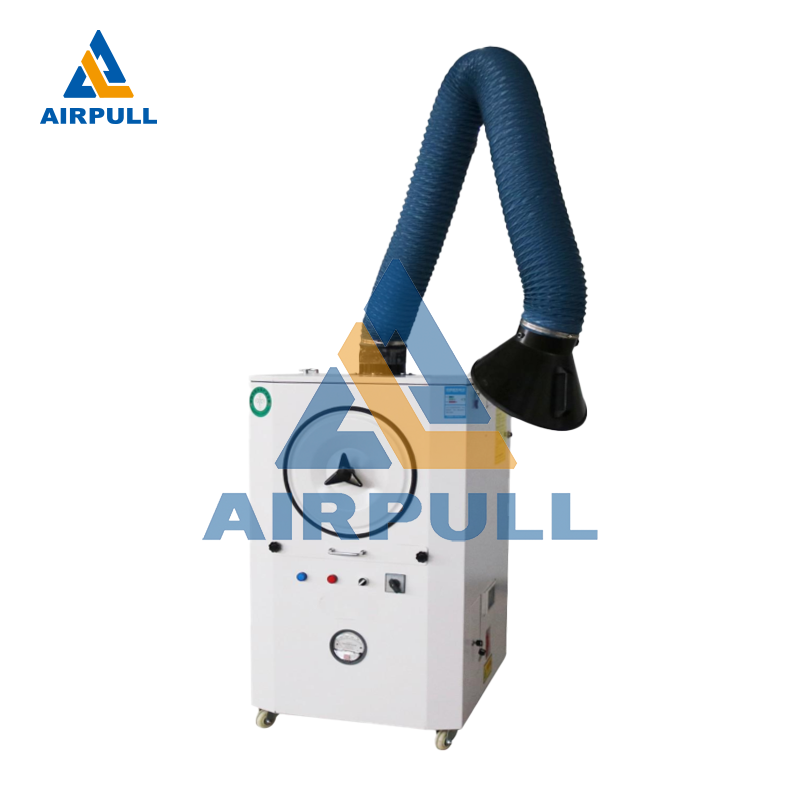
Selecting the right mobile welding fume dust collector is a critical decision that directly impacts workplace safety, regulatory compliance, and operational efficiency in metal fabrication environments. Welding operations generate hazardous airborne particulates and toxic gases that pose serious health risks to workers, including respiratory diseases, metal fume fever, and long-term chronic conditions. A properly chosen mobile welding fume dust collector provides targeted extraction at the source, maintains air quality standards, and offers the flexibility to move between workstations as production demands change. Understanding the technical specifications, filtration capabilities, and operational requirements is essential to making an informed purchasing decision that balances performance, cost, and long-term reliability.
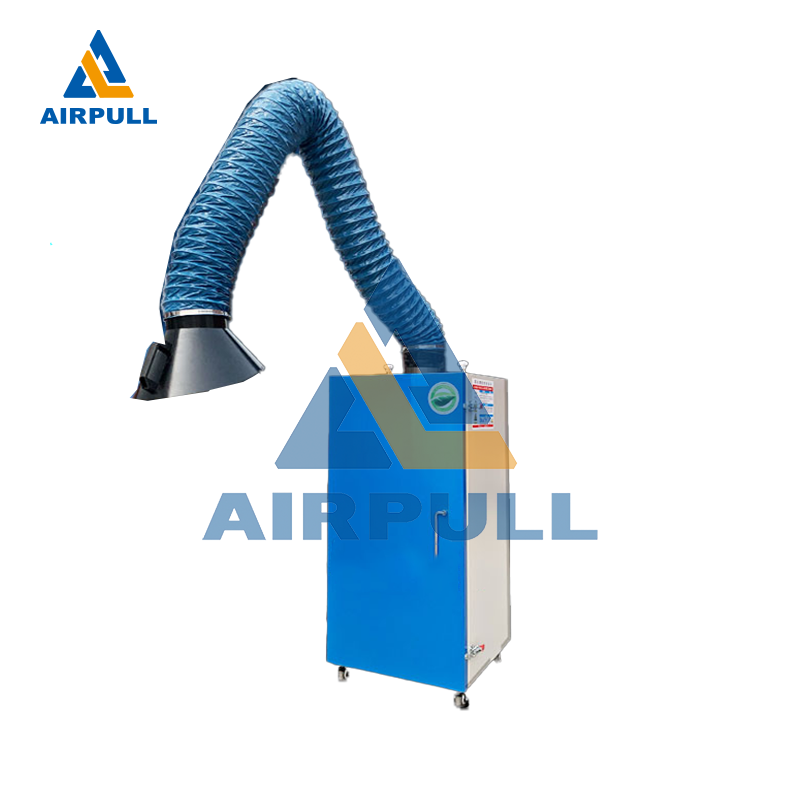
The selection process involves evaluating multiple factors including airflow capacity, filtration efficiency, portability features, noise levels, maintenance requirements, and compatibility with your specific welding processes. Whether you operate a small fabrication shop or manage a large industrial facility, the right mobile welding fume dust collector must match your welding application type, production volume, workspace layout, and budget constraints. This comprehensive guide walks you through the essential considerations and practical steps to identify a mobile welding fume dust collector that meets your operational needs while ensuring worker protection and environmental compliance.
Understanding Your Welding Process Requirements
Identifying Welding Methods and Fume Characteristics
The first step in choosing a mobile welding fume dust collector is thoroughly analyzing the welding processes used in your facility. Different welding methods produce distinct fume compositions and particulate loads that require specific filtration approaches. MIG welding typically generates higher volumes of fine particulates compared to TIG welding, while stick welding produces coarser particles mixed with slag. Stainless steel welding creates hexavalent chromium, a highly toxic compound requiring HEPA-grade filtration, whereas mild steel welding produces iron oxide fumes that are less hazardous but still require effective capture. Understanding your primary welding method determines the minimum filtration efficiency and airflow capacity your mobile welding fume dust collector must provide.
The base materials being welded significantly influence fume toxicity and collector requirements. Galvanized steel welding releases zinc oxide fumes that can cause metal fume fever, requiring robust pre-filtration to prevent filter clogging. Aluminum welding produces ozone as a byproduct, necessitating activated carbon filtration stages in addition to particulate filters. When selecting a mobile welding fume dust collector, document all welding processes, materials, wire types, and shielding gases used across your operation to ensure the system you choose can handle the full spectrum of contaminants generated. This comprehensive assessment prevents underspecification that leads to poor capture efficiency and premature equipment failure.
Assessing Production Volume and Duty Cycle
Production intensity directly impacts the performance requirements and durability expectations for your mobile welding fume dust collector. High-volume operations with continuous welding throughout shifts demand industrial-grade units with robust motors, larger filter surface areas, and enhanced cooling systems to prevent thermal overload. Intermittent welding operations with lower duty cycles may function adequately with lighter-duty models, though proper sizing remains critical for effective fume capture during active welding periods. Calculate your average daily welding hours, peak production periods, and simultaneous welding stations to determine whether a single mobile welding fume dust collector can serve multiple workstations or if dedicated units are necessary.
Consider future production growth when evaluating capacity requirements. A mobile welding fume dust collector that barely meets current demands will quickly become inadequate as production volumes increase, forcing premature replacement or supplementary equipment purchases. Industrial units designed for heavy-duty applications typically feature more durable construction, longer-lasting components, and higher airflow reserves that accommodate production expansion. Evaluate warranty coverage, expected service life, and manufacturer support to ensure your investment provides adequate capacity throughout its operational lifespan rather than requiring replacement within a few years due to insufficient performance margins.
Evaluating Workspace Layout and Portability Needs
The physical characteristics of your welding environment significantly influence which mobile welding fume dust collector design best suits your operation. Facilities with open floor plans and dispersed welding stations benefit from highly portable units with large caster wheels, compact footprints, and flexible arm configurations that quickly reposition between workstations. Congested workshops with limited floor space require mobile welding fume dust collectors with vertical designs, smaller bases, and articulating arms that extend overhead rather than occupying valuable production area. Measure aisle widths, doorway clearances, and workstation spacing to ensure your selected unit can navigate freely throughout the facility without obstructing material flow or creating safety hazards.
Consider whether welding occurs at fixed stations or involves fieldwork requiring equipment mobility. Some mobile welding fume dust collector models feature lightweight construction and ergonomic handles designed for frequent repositioning, while heavier industrial units prioritize filtration capacity over portability. Evaluate whether your operation requires single-person mobility or if team-based equipment movement is acceptable. Units with locking casters, cable management systems, and protective bumpers maintain stability during operation while facilitating safe transport. The ideal mobile welding fume dust collector balances portability requirements with the structural robustness needed to withstand repeated movement across industrial environments.
Evaluating Technical Specifications and Performance Metrics
Determining Required Airflow Capacity
Airflow capacity, measured in cubic feet per minute or cubic meters per hour, represents the volume of contaminated air a mobile welding fume dust collector can process. Adequate airflow ensures effective fume capture at the source before contaminants disperse throughout the workspace. For typical MIG and flux-cored arc welding applications, a minimum of 800 to 1200 CFM is recommended for single-station capture using flexible extraction arms. Higher amperage welding, multiple simultaneous extraction points, or larger capture hoods require proportionally greater airflow capacity. Insufficient airflow results in incomplete fume capture, allowing hazardous particulates to escape into the ambient environment where they endanger workers beyond the immediate welding area.
When evaluating airflow specifications, distinguish between rated capacity and actual performance at the capture point. mobile welding fume dust collector systems experience pressure drops through filters, ductwork, and extraction arms that reduce effective airflow below the fan rating. Quality manufacturers provide performance curves showing airflow at various static pressures, enabling accurate assessment of real-world capture efficiency. Verify that the unit maintains adequate airflow throughout the filter loading cycle, as accumulating particulates increase resistance and reduce performance. Variable speed controls allow operators to adjust airflow based on welding intensity, optimizing energy consumption while maintaining effective capture during active welding periods.
Understanding Filtration Efficiency Standards
Filtration efficiency determines how effectively a mobile welding fume dust collector removes harmful particulates from captured air before returning it to the workspace or exhausting it outdoors. Primary filters typically capture larger particles using pleated media with efficiency ratings between 85% and 95% for particles above one micron. However, welding fumes contain substantial quantities of submicron particles that penetrate standard filters and pose the greatest health risks due to their ability to reach deep lung tissue. High-efficiency particulate air filters, rated at 99.97% efficiency for 0.3-micron particles, provide the protection level necessary for toxic metal fumes including hexavalent chromium, manganese, and other hazardous welding byproducts.
Evaluate whether your mobile welding fume dust collector employs single-stage or multi-stage filtration. Multi-stage systems use pre-filters to capture larger particles and sparks, extending the service life of expensive final-stage HEPA filters while maintaining consistent airflow performance. Some advanced mobile welding fume dust collector units incorporate activated carbon filters to remove ozone and volatile organic compounds generated during certain welding processes. Verify that replacement filters meet or exceed the original equipment specifications, as aftermarket filters may sacrifice efficiency for lower cost. Regular filter monitoring and timely replacement maintain optimal performance, as overloaded filters reduce airflow, increase energy consumption, and allow particulate breakthrough that compromises air quality.
Assessing Motor Power and Energy Efficiency
Motor power directly influences airflow capacity, operational reliability, and energy costs throughout the service life of your mobile welding fume dust collector. Industrial applications typically require motors ranging from 1.5 to 3 kilowatts to generate sufficient airflow against the static pressure created by filters, ductwork, and extraction arms. Underpowered motors struggle to maintain adequate capture velocity, especially as filters accumulate particulate loads and resistance increases. Conversely, oversized motors consume unnecessary energy and generate excessive noise without providing proportional performance benefits. Match motor capacity to your specific airflow requirements, considering both initial capture efficiency and sustained performance as filters load during normal operation.
Energy efficiency significantly impacts operating costs, particularly in facilities running mobile welding fume dust collectors continuously throughout production shifts. Variable frequency drive technology allows motor speed adjustment based on real-time demand, reducing energy consumption during light welding periods while maintaining full capacity when needed. Calculate annual operating costs based on your local electricity rates and expected runtime to compare the total cost of ownership between models. Premium-efficiency motors may command higher initial purchase prices but deliver substantial energy savings over multi-year operational periods. Consider noise output specifications as well, since quieter operation improves workplace comfort and may eliminate the need for additional hearing protection in some environments.
Examining Extraction Arm Design and Capture Efficiency
Comparing Flexible Arm Configurations
The extraction arm serves as the critical interface between the mobile welding fume dust collector and the fume source, making its design and functionality essential to overall system performance. High-quality flexible arms maintain their position without sagging or drifting during welding operations, ensuring consistent capture hood placement near the arc. Internal articulation systems using spring-balanced joints or friction mechanisms provide stable positioning across the full range of motion while allowing easy single-handed repositioning. Arm length typically ranges from 2 to 4 meters, with longer arms providing greater reach but requiring more robust support mechanisms to prevent drooping. Evaluate whether your welding applications require overhead reach, lateral extension, or primarily vertical positioning to select the appropriate arm length and configuration.
The internal construction of the extraction arm affects both airflow efficiency and durability. Smooth interior surfaces minimize turbulence and pressure drops that reduce capture efficiency, while reinforced external construction withstands the physical abuse typical in industrial welding environments. Some mobile welding fume dust collector models feature arms with integrated lighting systems that illuminate the work area, improving weld quality and reducing eye strain. Consider whether your operation requires multiple extraction arms on a single collector unit to serve adjacent workstations or capture fumes from large weldments. Dual-arm configurations double capture capacity but require higher airflow ratings and more powerful motors to maintain adequate velocity at both capture points simultaneously.
Selecting Appropriate Capture Hood Designs
Capture hood design dramatically influences fume extraction efficiency at the source. Funnel-shaped hoods concentrate airflow to create high capture velocity in a focused area, ideal for stationary welding of small to medium components where the hood can be positioned close to the arc. Wider rectangular hoods provide broader coverage for large weldments or situations where precise hood placement is impractical, though they require higher airflow volumes to maintain adequate capture velocity across the expanded opening. Magnetic mounting systems allow quick hood attachment to steel workpieces, positioning the capture point optimally without requiring arm adjustment. Evaluate your typical welding configurations to determine which hood style provides the best balance between capture efficiency and operational flexibility.
The distance between the capture hood and welding arc critically affects extraction efficiency. Capture velocity decreases exponentially with distance, so positioning the hood within 6 to 12 inches of the fume source is essential for effective capture. However, excessively close positioning may interfere with shielding gas coverage, creating weld defects and requiring hood repositioning. Some advanced mobile welding fume dust collector hoods incorporate adjustable dampers that fine-tune airflow distribution and capture patterns based on specific welding parameters. Transparent or perforated hood designs maintain operator visibility while capturing fumes, reducing the need for frequent repositioning during complex welding procedures. Consider whether your welding processes generate significant spatter that could damage or clog hood openings, potentially requiring more robust or easily cleanable hood materials.
Understanding Capture Velocity Requirements
Capture velocity represents the air speed at the hood opening necessary to overcome the upward thermal plume created by welding heat and draw fumes into the mobile welding fume dust collector. Welding fumes initially rise rapidly due to the extreme temperatures at the arc, requiring capture velocities typically ranging from 100 to 200 feet per minute at the hood face to effectively redirect fumes into the extraction system. Insufficient capture velocity allows fumes to escape around the hood perimeter and disperse into the workplace atmosphere. Calculate the capture velocity your mobile welding fume dust collector provides by dividing the actual airflow at the hood by the hood opening area, ensuring the result meets or exceeds the recommended velocity for your welding process intensity.
Welding position and workpiece configuration affect the capture velocity required for effective fume extraction. Overhead welding creates stronger thermal plumes that require higher capture velocities compared to flat-position welding. Large vertical weldments generate convective air currents that can carry fumes away from improperly positioned hoods, necessitating strategic hood placement and potentially higher airflow rates. When evaluating a mobile welding fume dust collector, consider whether the unit provides sufficient airflow margin to maintain adequate capture velocity under your most challenging welding scenarios. Some operations benefit from adjustable flow controls that allow operators to increase extraction intensity during high-heat welding processes while reducing airflow during lighter operations to minimize energy consumption and noise.
Analyzing Maintenance Requirements and Operational Costs
Evaluating Filter Accessibility and Replacement Procedures
Filter maintenance represents the most significant recurring operational cost and downtime factor for any mobile welding fume dust collector. Units with tool-free filter access panels and clearly labeled replacement procedures minimize maintenance time and reduce the likelihood of incorrect installation that compromises filtration efficiency. Consider whether filters can be changed by production personnel during shift breaks or if specialized maintenance staff must perform replacements. Quick-change filter designs with handles or latches facilitate safe removal of heavy, loaded filters without exposing workers to captured particulates. Evaluate the physical weight and dimensions of replacement filters to ensure your maintenance team can safely handle them without lifting equipment or multiple personnel.
Filter service life directly impacts operational costs and should be evaluated based on your specific welding volume and fume characteristics. A mobile welding fume dust collector used continuously for high-amperage welding may require filter replacement every few months, while intermittent light-duty applications might extend filter life beyond a year. Differential pressure gauges indicate when filters become loaded and require replacement, preventing premature changes that waste filter life or delayed changes that reduce performance. Calculate annual filter costs by determining replacement frequency and multiplying by the per-filter cost, including both primary and final-stage filters. Some mobile welding fume dust collector manufacturers offer filter monitoring systems with digital displays or even smartphone connectivity that track filter loading and predict replacement timing based on usage patterns.
Considering Spark Arrestor and Pre-Filtration Systems
Welding operations generate not only fumes but also hot sparks and spatter that pose fire hazards and can damage expensive final-stage filters. Quality mobile welding fume dust collector units incorporate spark arrestor systems that trap and cool incandescent particles before they reach filter media. Baffle plates, wire mesh screens, or centrifugal separators remove larger particles and sparks while allowing fumes to pass through to the filtration stages. Effective spark arrestment significantly extends primary filter life by preventing burn-through damage and reducing the particulate load reaching the main filter elements. Examine whether the spark arrestor components are easily accessible for periodic cleaning, as accumulated debris reduces effectiveness and restricts airflow.
Pre-filtration stages capture coarse particles and reduce the load on expensive HEPA filters, dramatically extending their service life and reducing operating costs. Some mobile welding fume dust collector models use washable or mechanically cleaned pre-filters that eliminate the recurring cost of disposable media while maintaining consistent airflow performance. However, these systems require regular cleaning procedures that add to maintenance labor requirements. Evaluate the trade-off between filter replacement costs and maintenance labor based on your facility's operational structure. Self-cleaning filter systems use automated mechanisms such as reverse pulse cleaning or mechanical shaking to dislodge accumulated particles into collection drawers, reducing manual intervention and extending intervals between filter servicing.
Calculating Total Cost of Ownership
The purchase price represents only a fraction of the total investment required to operate a mobile welding fume dust collector over its service life. Develop a comprehensive cost analysis including equipment acquisition, installation, energy consumption, filter replacements, routine maintenance, repairs, and eventual disposal or replacement. Energy costs typically represent the largest ongoing expense, calculated by multiplying motor power consumption by operating hours and local electricity rates. A unit operating 2000 hours annually with a 2.5 kW motor at an electricity cost of $0.12 per kWh consumes approximately $600 in energy annually. Over a ten-year service life, energy costs alone could exceed the initial equipment purchase price, making efficiency a critical selection factor.
Factor in the cost implications of inadequate fume control, including potential regulatory fines, workers' compensation claims, increased absenteeism, and liability exposure. A properly specified mobile welding fume dust collector may command a higher initial investment but deliver superior worker protection, regulatory compliance, and long-term reliability that justify the premium. Evaluate warranty coverage and manufacturer support services, as comprehensive warranties and readily available technical assistance reduce unexpected repair costs and operational disruptions. Consider whether the manufacturer maintains adequate replacement parts inventory and provides responsive technical support, as extended downtime waiting for repairs or parts delivery can cost far more than the repair itself due to lost production and potential safety violations.
Ensuring Regulatory Compliance and Safety Features
Meeting Occupational Exposure Standards
Regulatory agencies worldwide establish permissible exposure limits for welding fumes and specific metal constituents that your mobile welding fume dust collector must help you achieve. The Occupational Safety and Health Administration, along with equivalent agencies in other countries, sets time-weighted average exposure limits for various welding fume components. Hexavalent chromium, produced when welding stainless steel, carries extremely stringent exposure limits requiring HEPA filtration to maintain compliant workplace air quality. Manganese exposure from welding operations has come under increased regulatory scrutiny due to neurological health effects, requiring effective source capture and filtration. Verify that your selected mobile welding fume dust collector provides filtration efficiency sufficient to maintain air quality below applicable exposure limits for all contaminants generated by your welding processes.
Documentation and compliance verification increasingly require air quality monitoring and record-keeping demonstrating effective fume control. Some advanced mobile welding fume dust collector systems include integrated air quality sensors that continuously monitor particulate levels and provide data logging for compliance documentation. Personal exposure monitoring may be necessary to verify that your fume extraction system adequately protects workers, particularly when welding materials that generate highly toxic constituents. Consider whether your mobile welding fume dust collector allows for easy integration with facility-wide air quality monitoring systems or environmental health and safety programs. Compliance extends beyond equipment purchase to include operator training, maintenance documentation, and periodic performance verification ensuring the system continues to function as designed throughout its service life.
Incorporating Fire Prevention and Safety Mechanisms
Fire safety represents a critical consideration when selecting a mobile welding fume dust collector, as welding sparks, accumulated combustible dust, and electrical components create multiple ignition sources. Quality units incorporate multiple fire prevention features including spark arrestors, flame-retardant filter media, temperature sensors, and automatic shutoff systems that detect abnormal heat buildup. Some advanced mobile welding fume dust collector models include fire suppression systems with heat-activated sprinklers or chemical suppressants that automatically activate when dangerous temperatures are detected. Examine whether the unit meets relevant fire safety standards and certifications applicable to your jurisdiction and industry sector.
Electrical safety features protect both equipment and personnel from hazards associated with high-power motor operation in industrial environments. Overload protection prevents motor damage from excessive current draw, while ground fault protection minimizes electrocution risks in wet or conductive environments. Consider whether your facility voltage matches the mobile welding fume dust collector specifications, as voltage mismatches can damage motors or create safety hazards. Units designed for industrial environments typically feature robust electrical enclosures with appropriate ingress protection ratings preventing dust and moisture infiltration into electrical components. Emergency stop buttons should be clearly marked and easily accessible, allowing immediate shutdown in case of equipment malfunction or unsafe conditions.
Verifying Noise Level Compliance
Noise generated by mobile welding fume dust collector operation contributes to overall workplace noise exposure and must be considered alongside other sound sources in your facility. High-velocity airflow, motor operation, and vibration can generate noise levels exceeding 80 decibels, potentially requiring hearing protection when combined with welding equipment noise. Review manufacturer specifications for sound pressure levels measured at standard distances, comparing values across different models to identify quieter alternatives. Some premium mobile welding fume dust collector units incorporate sound-dampening motor enclosures, vibration isolation mounts, and acoustic insulation that significantly reduce operational noise without compromising performance.
Workplace noise regulations establish maximum permissible exposure levels and may require engineering controls to reduce sound levels before resorting to personal protective equipment. Selecting a quieter mobile welding fume dust collector contributes to overall noise reduction efforts and improves workplace comfort, potentially enhancing productivity and reducing fatigue. Consider the noise profile throughout the operational cycle, as some units operate more quietly at reduced airflow settings suitable for light welding applications. Variable speed controls that adjust motor speed based on demand provide noise reduction benefits in addition to energy savings, making them attractive features for facilities prioritizing worker comfort and regulatory compliance.
FAQ
What is the minimum airflow capacity needed for a mobile welding fume dust collector?
For single-station MIG or flux-cored arc welding applications, a minimum airflow capacity of 800 to 1200 cubic feet per minute is recommended to achieve effective source capture using a flexible extraction arm. Higher amperage welding, stainless steel applications, or multiple simultaneous extraction points require proportionally greater airflow, potentially reaching 1500 to 2000 CFM or more. The actual airflow requirement depends on welding process intensity, fume generation rate, hood design, and positioning distance from the arc. Always verify that the mobile welding fume dust collector maintains adequate capture velocity at the hood opening throughout the filter loading cycle, not just when filters are clean.
How often do filters need replacement in a mobile welding fume dust collector?
Filter replacement frequency varies dramatically based on welding volume, process type, base materials, and operating hours. High-volume operations with continuous welding may require primary filter replacement every two to six months, while intermittent light-duty applications might extend filter life to a year or more. HEPA final filters typically last longer than primary filters due to pre-filtration protection, potentially requiring replacement annually or when differential pressure indicators show excessive loading. Monitor differential pressure gauges or digital filter monitoring systems rather than relying solely on time-based replacement schedules, as actual filter loading depends on specific operational conditions. Establish a preventive maintenance schedule based on your facility's usage patterns and adjust replacement intervals based on observed filter performance.
Can a mobile welding fume dust collector serve multiple welding stations?
A single mobile welding fume dust collector can serve multiple welding stations if it provides sufficient airflow capacity for simultaneous operation and features multiple extraction arms or connection points. Dual-arm configurations allow two welders to share one collector unit, provided the total airflow capacity maintains adequate capture velocity at both extraction points. However, mobility becomes limited when serving multiple fixed stations, reducing the flexibility advantage of mobile designs. For facilities with numerous permanent welding stations, dedicated collectors or centralized extraction systems with multiple pickup points may prove more practical than mobile units. Evaluate your facility layout, welding station distribution, and operational patterns to determine whether mobile collectors serving multiple stations or dedicated single-station units better suit your requirements.
Do mobile welding fume dust collectors require special electrical installations?
Most mobile welding fume dust collector units designed for industrial applications require 208-240 volt single-phase or three-phase electrical power, though some lighter-duty models operate on standard 120-volt circuits. Verify that your facility electrical infrastructure provides adequate voltage, amperage capacity, and appropriate circuit protection for the specific mobile welding fume dust collector model you select. Industrial units with motors exceeding 2 kilowatts typically require dedicated circuits with proper overcurrent protection and grounding to ensure safe operation and prevent nuisance circuit breaker trips. Consult with a qualified electrician to confirm electrical compatibility before purchasing, as voltage mismatches or inadequate circuit capacity can damage equipment or create safety hazards requiring costly modifications to your facility electrical system.
Table of Contents
- Understanding Your Welding Process Requirements
- Evaluating Technical Specifications and Performance Metrics
- Examining Extraction Arm Design and Capture Efficiency
- Analyzing Maintenance Requirements and Operational Costs
- Ensuring Regulatory Compliance and Safety Features
-
FAQ
- What is the minimum airflow capacity needed for a mobile welding fume dust collector?
- How often do filters need replacement in a mobile welding fume dust collector?
- Can a mobile welding fume dust collector serve multiple welding stations?
- Do mobile welding fume dust collectors require special electrical installations?