EN
EN


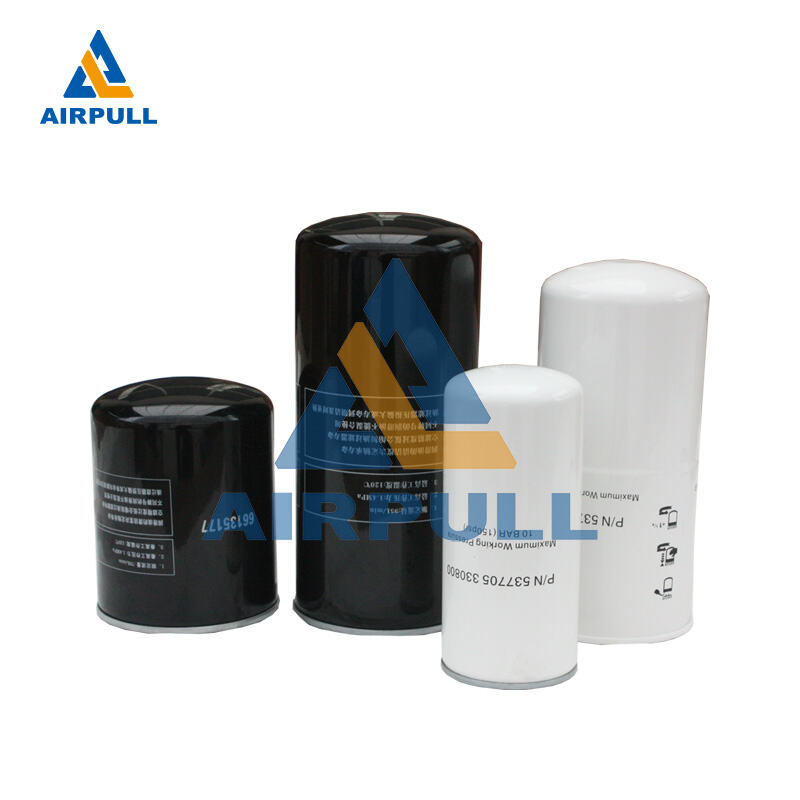
Choosing and verifying the performance of a best industrial air filter is one of the most critical decisions a plant engineer or procurement manager will make. In high-demand industrial environments, air filtration directly affects equipment longevity, energy efficiency, product quality, and worker safety. A filter that appears adequate on a specification sheet may perform very differently once it is installed under real operating conditions—which is precisely why structured, methodical testing is not optional. It is the only reliable way to confirm that you have truly sourced the best industrial air filter for your specific application.
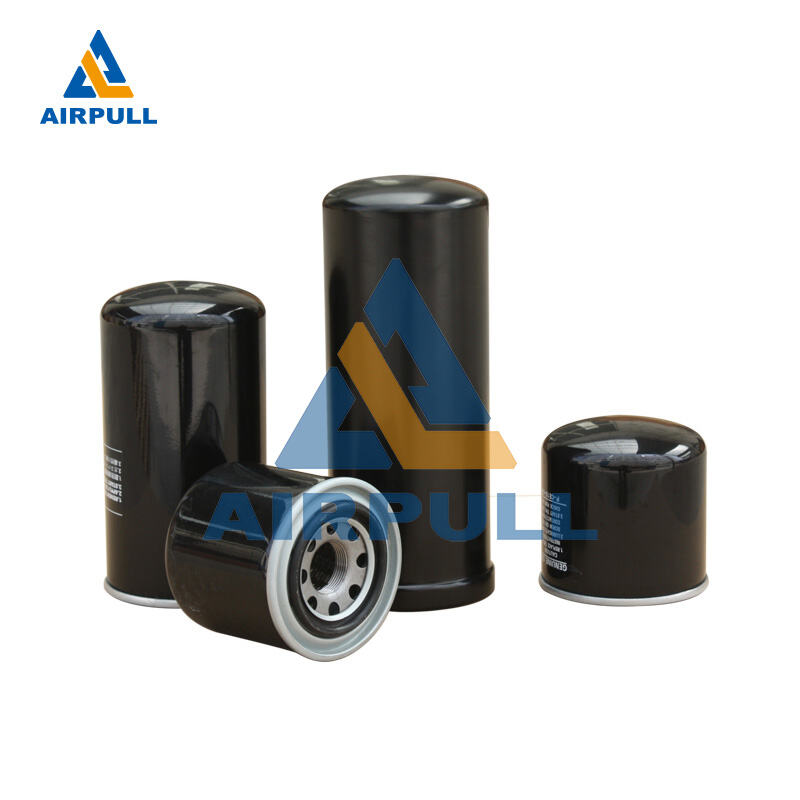
This guide walks through the complete testing process—from baseline benchmarking before installation to ongoing performance validation in the field. Whether you are evaluating a new supplier, commissioning a new dust collection system, or auditing your existing filtration infrastructure, understanding how to rigorously test a best industrial air filter will save your operation from costly downtime, premature equipment wear, and regulatory non-compliance. The methods described here are grounded in industry-standard practices and adapted for real-world industrial conditions where variables are rarely as clean as a laboratory setting.
Understanding What You Are Testing and Why It Matters
Defining Performance Metrics Before You Begin
Before any physical testing begins, it is essential to define what performance actually means for your specific use case. The best industrial air filter in a cement plant operates under fundamentally different conditions than one used in a pharmaceutical cleanroom or a woodworking facility. Each application demands a distinct set of performance thresholds, and your test methodology must be designed around those thresholds, not around generic benchmarks. Start by documenting your required filtration efficiency, maximum allowable pressure drop, dust holding capacity, and operating temperature range.
Filtration efficiency is typically expressed as a percentage of particles captured at a given particle size, such as MERV, ISO ePM, or EN 779 ratings. These ratings give you a starting framework, but they are determined under controlled laboratory conditions. Real-world performance of a best industrial air filter will vary based on humidity, particle composition, airflow velocity fluctuations, and the presence of oily or fibrous contaminants. Knowing your baseline requirements ensures that your testing protocol is calibrated to detect meaningful deviations rather than irrelevant fluctuations.
Pressure drop—the resistance the filter imposes on airflow—is equally important. Excessive pressure drop forces fans and compressors to work harder, increasing energy consumption and accelerating mechanical wear. When testing a best industrial air filter, you must measure initial clean differential pressure and track how it evolves over time as the filter loads with particulate matter. This progression reveals how efficiently the filter manages its dust cake and whether the cleaning mechanism, if applicable, is functioning as designed.
Establishing a Controlled Baseline Environment
A reliable test begins with a controlled baseline. Before installing the filter under evaluation, measure the upstream airflow rate, the ambient particulate concentration, and the operating pressure within the system. These baseline readings give you a reference point against which all subsequent measurements are compared. Without a clean baseline, it is impossible to attribute performance changes to the filter itself rather than to system-level variables.
If you are comparing multiple candidates to identify the best industrial air filter for your application, it is critical that each candidate is tested under identical conditions. Swap filters during the same shift, using the same fan speed, the same upstream dust loading, and the same measurement instruments. Even minor variations in airflow velocity can significantly alter both efficiency and pressure drop readings, leading to false comparisons that could cause you to reject the superior option.
Laboratory Pre-Testing Methods for Industrial Air Filters
Particle Counting and Efficiency Verification
Laboratory pre-testing provides a controlled environment where you can isolate filter performance from system-level variables. The most fundamental test is particle counting, which involves introducing a known concentration of standardized test aerosol upstream of the filter and measuring the particle concentration downstream. The ratio of upstream to downstream concentration determines the filter's actual capture efficiency at various particle sizes. For a best industrial air filter, you should expect efficiency figures to align closely with the manufacturer's rated specifications across the target particle size range.
Modern optical particle counters can measure particles as small as 0.3 microns, making them suitable for evaluating filters used in precision manufacturing or cleanroom adjacent environments. For coarser industrial dust typical of metalworking, quarrying, or grain handling, gravimetric methods—where you weigh the filter before and after a standardized dust loading cycle—provide a practical and reliable efficiency measure. A best industrial air filter designed for coarse industrial dust should demonstrate high mass arrestance without excessive pressure drop buildup during the gravimetric test cycle.
It is important to test filters at the airflow velocity they will actually experience in your system, not just at the rated face velocity shown on the datasheet. Efficiency curves are not flat—many filters perform better or worse depending on whether air velocity is above or below the rated design point. A thorough pre-test protocol that includes velocity variation sweeps will reveal whether you are genuinely evaluating the best industrial air filter for your operational profile or merely confirming that the filter performs well under idealized conditions it will never actually encounter.
Dust Holding Capacity and Pulse-Clean Response Testing
Dust holding capacity (DHC) testing reveals how much particulate matter a filter can retain before its pressure drop exceeds the system's operational limit. This is tested by feeding a continuous, metered stream of standardized test dust—typically A2 fine test dust per ISO 12103-1—into the upstream air stream while monitoring differential pressure. The test runs until the filter reaches its terminal pressure drop, and the total mass of dust captured is recorded. A best industrial air filter with high DHC will handle longer operating cycles between maintenance events, directly reducing operational costs.
For self-cleaning filter systems that use pulse-jet regeneration, the testing protocol must also evaluate the effectiveness of the cleaning cycle. After loading the filter to a defined pressure drop threshold, trigger the pulse-clean sequence and measure how completely the filter recovers its clean differential pressure. An effective best industrial air filter with pulse-clean capability should recover to within a predictable range of its initial clean pressure drop after each cleaning cycle, maintaining consistent airflow throughput without requiring premature replacement.
Field Testing Procedures During and After Installation
Pre-Installation Inspection and System Readiness
Field testing begins before the filter is even installed. Inspect every filter element for shipping damage, deformation of the filter media, damaged gaskets or seals, and any compromise to the filter frame or end caps. A filter that leaves the factory as the best industrial air filter in its class can be rendered ineffective by a pinhole tear in the media or a gasket that fails to seat properly in the housing. Physical inspection under adequate lighting—or with a flashlight scan against a dark background—will catch media damage that is otherwise invisible under normal observation.
Check the filter housing itself for bypass leakage points. Even the most efficient filter media is irrelevant if contaminated air can flow around the filter rather than through it. Use a smoke pencil or ultrasonic leak detector to verify that all housing joints, access doors, and tube sheet connections are sealed. Document the condition of the housing before filter installation so that any future performance anomalies can be traced back to either the filter or the housing rather than remaining ambiguous.
In-Service Differential Pressure Monitoring
Once the filter is installed and the system is running, differential pressure monitoring is your primary ongoing performance indicator. Install calibrated magnehelic gauges or digital pressure transmitters on both the upstream and downstream sides of the filter housing. Record baseline readings at startup under normal operating load. Then establish a monitoring schedule—daily, weekly, or continuously via SCADA depending on your operational criticality—to track how differential pressure evolves over the service life of the filter.
A best industrial air filter in proper working condition will show a predictable, gradual increase in differential pressure as it accumulates dust. A sudden spike may indicate filter media collapse, bypass leakage, or an upstream process upset that is overloading the filtration system. A differential pressure that remains suspiciously flat, on the other hand, could indicate a bypass leak that is allowing dirty air to circumvent the filter entirely—which is equally dangerous. Trending this data over time, rather than relying on single-point snapshots, is the hallmark of a rigorous field testing approach.
Compare your actual field pressure drop readings against the manufacturer's predicted performance curve for the specific dust loading conditions in your facility. Significant deviations—either higher or lower than predicted—warrant investigation. When a best industrial air filter consistently performs within the predicted envelope across multiple service cycles, you have strong evidence that the product is genuinely suited to your application and that your system integration is sound.
Downstream Air Quality Verification
Differential pressure tells you about flow resistance, but it does not directly confirm filtration efficiency under operating conditions. To verify that the filter is actually capturing contaminants rather than merely impeding airflow, you must measure downstream air quality. Use isokinetic sampling probes positioned in the downstream duct to collect air samples at the representative flow velocity. Analyze these samples gravimetrically or with a particle counter, depending on your target contaminant type and regulatory requirements.
For operations governed by occupational exposure limits or environmental emission standards, downstream air quality testing is not merely a best practice—it is a compliance obligation. The best industrial air filter for a regulated environment must be tested and documented at defined intervals to demonstrate that it continues to meet the required emission or exposure thresholds. Retain all test records, including calibration certificates for your measurement instruments, as these will be essential during regulatory audits or incident investigations.
Interpreting Test Results to Confirm Filter Selection
Comparing Results Against Application Requirements
Once your testing data is collected—both from laboratory pre-testing and from field monitoring—the interpretation phase begins. Lay the results against your original application requirements. Does the filter achieve the required efficiency at the relevant particle sizes? Is the pressure drop within the range that your fan system can sustain without overspeeding or overheating? Does the dust holding capacity support acceptable maintenance intervals? A best industrial air filter is only truly the best when it satisfies all three of these criteria simultaneously, not just one or two in isolation.
Pay particular attention to the filter's behavior under transient conditions—startup surges, process upsets, or seasonal humidity changes. A filter that performs flawlessly under steady-state conditions but degrades rapidly during high-humidity periods or after an unplanned process excursion is not the best industrial air filter for an operation where those conditions are a regular occurrence. Transient performance data collected during field testing is therefore just as important as steady-state baseline data.
Documenting and Acting on Test Findings
The value of testing is only fully realized when findings are properly documented and acted upon. Create a structured test report that includes all instrument readings, calibration records, environmental conditions during testing, and a clear comparison against acceptance criteria. This documentation serves multiple purposes: it validates your procurement decision, informs your maintenance planning cycle, and provides evidence of due diligence if questions arise about equipment performance or regulatory compliance.
If test results indicate that the current filter is not the best industrial air filter for your application, use the data to guide a more targeted selection process. Identify which performance dimension fell short—efficiency, pressure drop, or service life—and use that finding to refine your specifications when evaluating alternative filter designs or media types. If you want a filter that combines high efficiency with low energy consumption and long service intervals, consider exploring solutions like the best industrial air filter options engineered specifically for demanding self-cleaning applications, where both performance and operational cost are engineered together rather than traded off against each other.
FAQ
How often should I test an industrial air filter once it is installed?
Ongoing differential pressure should be monitored continuously or at least daily for critical applications. Downstream air quality testing frequency depends on your regulatory requirements and the nature of the process—monthly testing is common for regulated environments, while quarterly testing may suffice for general industrial ventilation. Any significant change in operating conditions—new raw materials, process modifications, increased production throughput—should trigger an immediate re-evaluation of your filter's performance to confirm it remains the best industrial air filter for the updated conditions.
Can I use pressure drop alone to determine when to replace a filter?
Pressure drop is the most practical and widely used indicator for filter replacement scheduling, but it should not be used in isolation. A filter can exceed its terminal pressure drop due to media blinding while still appearing to maintain efficiency, or it can develop a bypass leak that keeps pressure drop deceptively low while allowing contaminated air to pass through. The most reliable replacement decisions are made using a combination of pressure drop trending, scheduled downstream air quality checks, and visual inspection of the filter media and sealing surfaces during planned maintenance windows.
What is the difference between filtration efficiency and arrestance when evaluating a best industrial air filter?
Filtration efficiency refers to the filter's ability to capture particles at a specific particle size, typically expressed as a percentage at a defined micron threshold. Arrestance, by contrast, is a gravimetric measure of how much of the total mass of a standardized dust challenge the filter captures, regardless of particle size distribution. For coarse industrial dust applications, arrestance is often the more relevant metric because the majority of the dust mass is carried by larger particles. For fine particulate or respiratory hazard control, particle-size-specific efficiency is the more critical measure when selecting the best industrial air filter for the application.
Does filter media type affect the testing protocol I should use?
Yes, significantly. Cellulose, synthetic, spunbond polyester, and membrane-coated filter media each behave differently under loading and cleaning cycles, and each requires slightly different evaluation approaches. Membrane-coated media used in a best industrial air filter for pulse-clean applications, for example, requires careful evaluation of surface filtration performance and membrane integrity after repeated cleaning pulses—factors that are irrelevant when testing a depth-loading cellulose panel filter. Always align your testing protocol with the specific media type, filtration mechanism, and operating environment of the filter under evaluation to ensure that your results are meaningful and actionable.
Table of Contents
- Understanding What You Are Testing and Why It Matters
- Laboratory Pre-Testing Methods for Industrial Air Filters
- Field Testing Procedures During and After Installation
- Interpreting Test Results to Confirm Filter Selection
-
FAQ
- How often should I test an industrial air filter once it is installed?
- Can I use pressure drop alone to determine when to replace a filter?
- What is the difference between filtration efficiency and arrestance when evaluating a best industrial air filter?
- Does filter media type affect the testing protocol I should use?