
 EN
EN


Energy consumption is one of the most significant operating costs in manufacturing and processing plants, and industrial filtration equipment plays a surprisingly large role in how much power a facility uses every day. When industrial filtration equipment is poorly selected, oversized, or inadequately maintained, it forces fans, blowers, and compressors to work harder than necessary, driving up energy bills and shortening equipment lifespan. Understanding how industrial filtration equipment contributes to or reduces energy waste is essential knowledge for any facility manager, engineer, or procurement professional aiming to cut operational costs without sacrificing air or fluid quality.
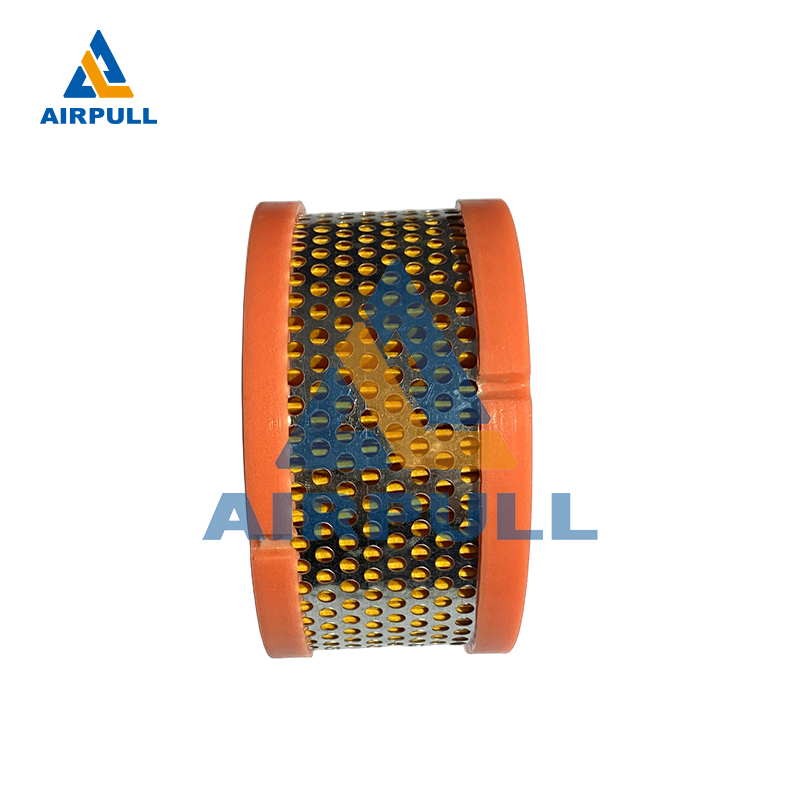
This guide focuses specifically on energy-saving strategies for industrial filtration equipment. Whether you are specifying new industrial filtration equipment for a greenfield project or optimizing an existing filtration system, the principles covered here will help you make smarter decisions. From understanding pressure drop dynamics to evaluating self-cleaning technologies, industrial filtration equipment choices have a direct and measurable impact on energy efficiency across virtually every industrial sector.
How Pressure Drop Affects Industrial Filtration Equipment Energy Use
The Relationship Between Filter Resistance and Power Draw
Pressure drop is the single most important energy-related factor in industrial filtration equipment design. Every filter element adds resistance to airflow or fluid flow, and that resistance must be overcome by a motor-driven system. When industrial filtration equipment generates high pressure drop, the fan or pump motor must consume more electrical energy to maintain the required flow rate. Even a modest increase in pressure drop across industrial filtration equipment can translate into thousands of kilowatt-hours of additional energy consumption over the course of a year.
Selecting industrial filtration equipment with a low initial pressure drop and a slow rate of pressure drop increase over its service life is therefore a primary energy-saving strategy. High-quality filter media used in modern industrial filtration equipment is engineered to capture particles efficiently while maintaining open airflow pathways. This dual characteristic—high filtration efficiency and low resistance—is the engineering foundation of energy-efficient industrial filtration equipment.
Why Filter Loading Patterns Matter
As industrial filtration equipment accumulates captured dust and particulate, pressure drop rises. If industrial filtration equipment is allowed to load excessively before cleaning or replacement, energy consumption increases dramatically. Facilities that monitor differential pressure across their industrial filtration equipment and act on those readings proactively will consistently use less energy than those that follow fixed time-based maintenance schedules regardless of actual filter condition. Smart monitoring of industrial filtration equipment gives operators data-driven control over energy expenditure.
Self-Cleaning Technology in Industrial Filtration Equipment
How Pulse-Jet Cleaning Reduces Continuous Energy Load
Self-cleaning industrial filtration equipment uses automated pulse-jet or reverse-air mechanisms to dislodge accumulated dust from filter surfaces, restoring low pressure drop without stopping operation. This technology is one of the most impactful innovations available in industrial filtration equipment because it keeps pressure drop consistently low throughout the service cycle. Rather than allowing pressure drop to climb until a filter is replaced, self-cleaning industrial filtration equipment maintains near-optimal resistance levels continuously, which means the drive motor operates closer to its design point rather than fighting excessive back pressure.
Compared with standard bag filters or cartridge-based industrial filtration equipment that require manual changeouts, self-cleaning industrial filtration equipment dramatically reduces both downtime and the energy penalty of operating with progressively loaded filters. The energy savings from maintaining low and consistent pressure drop in industrial filtration equipment often justify the higher initial capital investment within one to two years of operation, depending on dust load conditions and operating hours.
Matching Cleaning Frequency to Actual Conditions
Effective self-cleaning industrial filtration equipment uses differential pressure sensors to trigger cleaning pulses only when needed rather than on a fixed timer. This demand-based approach reduces compressed air consumption for the cleaning mechanism itself and prevents over-cleaning, which can damage filter media in industrial filtration equipment over time. Well-calibrated cleaning cycles in industrial filtration equipment extend filter media life while simultaneously reducing the energy input required to maintain airflow. Facilities that invest in this level of control intelligence for their industrial filtration equipment achieve compound energy benefits across both filtration and compressed air systems.
Selecting and Sizing Industrial Filtration Equipment for Energy Efficiency
Right-Sizing to Avoid Unnecessary Load
Oversized industrial filtration equipment may seem like a conservative safety margin, but it often results in poor airflow distribution, inefficient filter utilization, and higher capital costs without delivering proportional energy benefits. Conversely, undersized industrial filtration equipment creates very high face velocities across filter media, increasing pressure drop and accelerating filter loading. Correct sizing of industrial filtration equipment requires careful analysis of peak and average volumetric flow rates, inlet dust concentration, and allowable pressure drop for the connected system.
Engineers specifying industrial filtration equipment should also account for future capacity needs. Designing industrial filtration equipment with modular expansion capability allows facilities to scale filtration area as production grows, avoiding the energy and cost penalties of operating undersized equipment. Properly sized industrial filtration equipment is not merely a technical exercise—it is a direct lever for long-term energy cost management throughout the equipment life cycle.
Filter Media Selection and Its Energy Implications
The type of filter media chosen for industrial filtration equipment has a profound effect on energy efficiency. Nanofiber surface-loading media, for example, captures particles at the filter surface rather than in depth, resulting in lower initial pressure drop and easier cleaning compared with depth-loading media in standard industrial filtration equipment. Pleated filter cartridges used in modern industrial filtration equipment offer significantly more filtration area per unit housing volume, reducing face velocity and pressure drop compared with older bag-style industrial filtration equipment of equivalent flow capacity. Specifying the correct media for the specific dust type and concentration in each application ensures industrial filtration equipment performs at its energy-efficient best throughout its service life.
FAQ
How often should industrial filtration equipment be serviced to maintain energy efficiency?
Service frequency for industrial filtration equipment should be based on differential pressure readings rather than fixed schedules. When pressure drop across industrial filtration equipment reaches the manufacturer's recommended maximum, cleaning or media replacement is needed. In high-dust environments, industrial filtration equipment may require attention more frequently, while in cleaner conditions it may operate for extended periods without intervention. Monitoring industrial filtration equipment in real time gives the most accurate and energy-efficient service schedule.
What is the typical energy saving from upgrading to self-cleaning industrial filtration equipment?
The energy saving from upgrading to self-cleaning industrial filtration equipment varies by application, but facilities often report a reduction in fan motor energy consumption of ten to thirty percent compared with conventional industrial filtration equipment operating under loaded conditions. This saving comes primarily from maintaining lower and more consistent pressure drop across industrial filtration equipment throughout its operating cycle. Additional savings accrue from reduced downtime and lower filter media consumption associated with self-cleaning industrial filtration equipment.
Can industrial filtration equipment be retrofitted with energy-saving upgrades?
Yes, many existing industrial filtration equipment installations can be upgraded to improve energy efficiency without full replacement. Common retrofits include installing differential pressure monitoring systems, upgrading filter media to low-resistance nanofiber cartridges, and adding pulse-jet cleaning controllers to previously manual industrial filtration equipment. Before retrofitting, an energy audit of the current industrial filtration equipment system helps identify where the greatest savings are available and whether retrofit or full replacement of industrial filtration equipment offers the better return on investment.
