EN
EN


Designing a compressed air filtration system starts with one clear principle: the filter train must match the contamination risk, pressure target, and end-use quality requirement of your process. In industrial environments, air is never just air; it carries particles, condensed water, oil aerosols, and vapor that can quietly damage tools, spoil finishes, or contaminate products. A reliable compressed air filtration system is therefore not an accessory but a core utility design decision. When the design is right, plants stabilize quality, reduce unplanned maintenance, and protect downstream equipment life.
The practical way to design a compressed air filtration system is to move step by step from demand definition to component staging, then to layout validation and lifecycle planning. This avoids over-specifying expensive filtration where it is not needed, while preventing under-filtration in sensitive applications. In B2B operations, the best compressed air filtration system is one that delivers consistent air quality at stable differential pressure with predictable service intervals. The sections below explain exactly how to build that design logic into a working engineering workflow.
Define Air Quality Requirements Before Selecting Hardware
Map contamination sources and process sensitivity
Every compressed air filtration system should begin with a contamination map across the compressor room, distribution network, and points of use. Atmospheric intake conditions, compressor oil carryover, pipe corrosion, and condensate behavior all determine the particle and aerosol load entering the line. Different production zones often require different cleanliness levels, so one plant may need multiple branch standards. This is why designing one uniform compressed air filtration system for the entire site often creates either quality risk or unnecessary cost.
Process sensitivity should be documented in operational terms, not generic labels. Pneumatic actuators may tolerate a moderate particle load, while coating lines, precision instrumentation, and packaging operations may require much cleaner and drier air. By translating each use point into a contamination tolerance profile, engineers can stage the compressed air filtration system according to real impact. This creates a defensible design basis for procurement, commissioning, and audit review.
Set pressure, flow, and dew point design envelopes
A compressed air filtration system is only effective when pressure and flow constraints are treated as first-class design inputs. Filters with excellent removal ratings can still fail operationally if pressure drop pushes end-use pressure below equipment requirements. Peak demand, diversity factors, and transient load behavior should be included so the compressed air filtration system performs under real plant dynamics, not only average conditions. Undersized housings are a common source of recurring loss.
Dew point targets also shape the filtration sequence because moisture control and aerosol removal are tightly linked. If drying performance is weak, downstream filters face higher liquid burden and shorter life. A stable compressed air filtration system therefore integrates moisture separation, condensate management, and filtration as one engineered chain. This approach keeps pressure loss predictable and supports consistent product quality over long production cycles.
Build the Filtration Sequence in the Correct Order
Use staged filtration to remove bulk, then fine, then vapor contaminants
The most reliable compressed air filtration system follows a staged path: first remove bulk liquid and coarse particles, then capture fine particulates and oil aerosols, then address vapor where required. This sequence protects high-efficiency elements from early loading and reduces lifecycle cost. Reversing the order forces fine elements to handle contaminants they were not designed to carry. Over time, that weakens the compressed air filtration system and increases unplanned element changes.
Staging also helps isolate failure modes during troubleshooting. If differential pressure rises at one stage, maintenance teams can quickly identify whether the issue is upstream moisture carryover, compressor condition, or abnormal process demand. In a properly designed compressed air filtration system, each stage has a clear role and measurable performance boundary. That structure simplifies root-cause analysis and improves service discipline.
Coordinate separators, dryers, and final filters as one chain
A compressed air filtration system should never be designed independently from separator and dryer behavior. Mechanical separators remove free liquid efficiently, dryers control vapor phase moisture, and coalescing elements handle aerosols that remain. When these units are coordinated, downstream filters stay cleaner, pressure drop remains stable, and air quality excursions are reduced. When they are not coordinated, the compressed air filtration system carries hidden stress that appears later as quality defects.
At the component selection stage, many teams review element ratings but ignore system compatibility at expected operating temperature and pressure. That gap leads to mismatched capacities and unstable performance during seasonal shifts. A stronger method is to validate the complete compressed air filtration system under normal, peak, and start-up scenarios. This creates a resilient configuration that behaves consistently across operating conditions.
Engineer Layout, Sizing, and Validation for Plant Conditions
Size for peak load while controlling differential pressure
Sizing is one of the most decisive steps in a compressed air filtration system design. The goal is not simply to meet nominal flow but to maintain target cleanliness at peak throughput without excessive differential pressure. Conservative velocity limits through filter elements reduce carryover risk and prolong service life. A compressed air filtration system that is properly sized usually delivers lower total cost over time than a low-capex installation that chokes under real production demand.
Engineers should specify acceptable pressure-drop ranges at clean and loaded conditions and connect those ranges to maintenance triggers. Without this definition, teams often run elements too long and accept hidden energy penalties. A data-driven compressed air filtration system uses pressure trend visibility to keep both air quality and energy use under control. This shifts maintenance from reactive replacement to planned performance management.
Place filtration stages where they protect critical points of use
Central treatment is important, but distribution layout determines whether the compressed air filtration system protects sensitive equipment effectively. Long pipe runs, dead legs, and poorly drained branches can reintroduce moisture and particulates after central filtration. For that reason, point-of-use polishing is often required for high-sensitivity stations. The best compressed air filtration system combines central efficiency with local risk control.
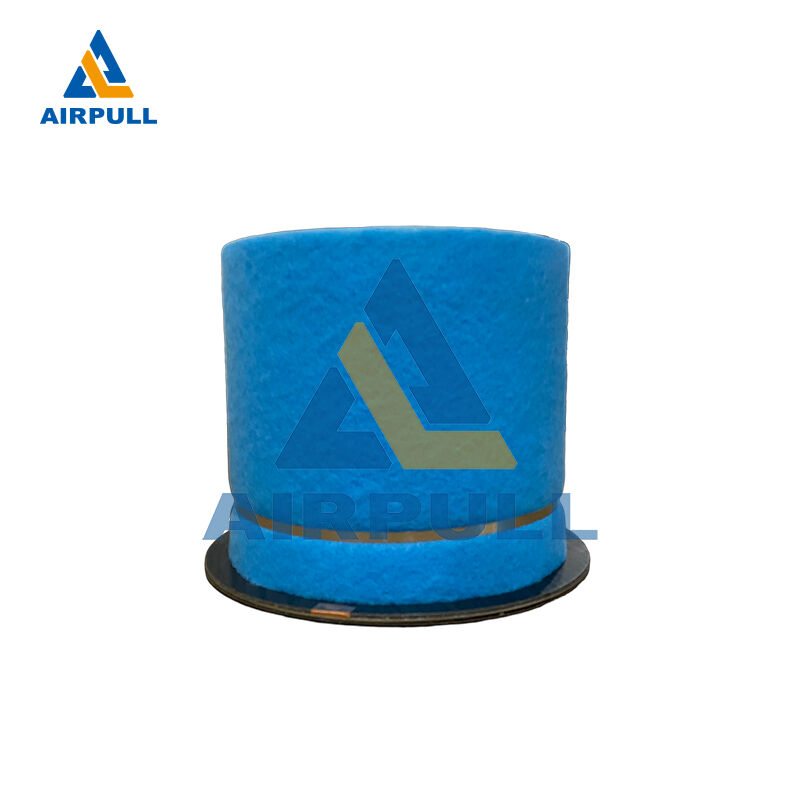
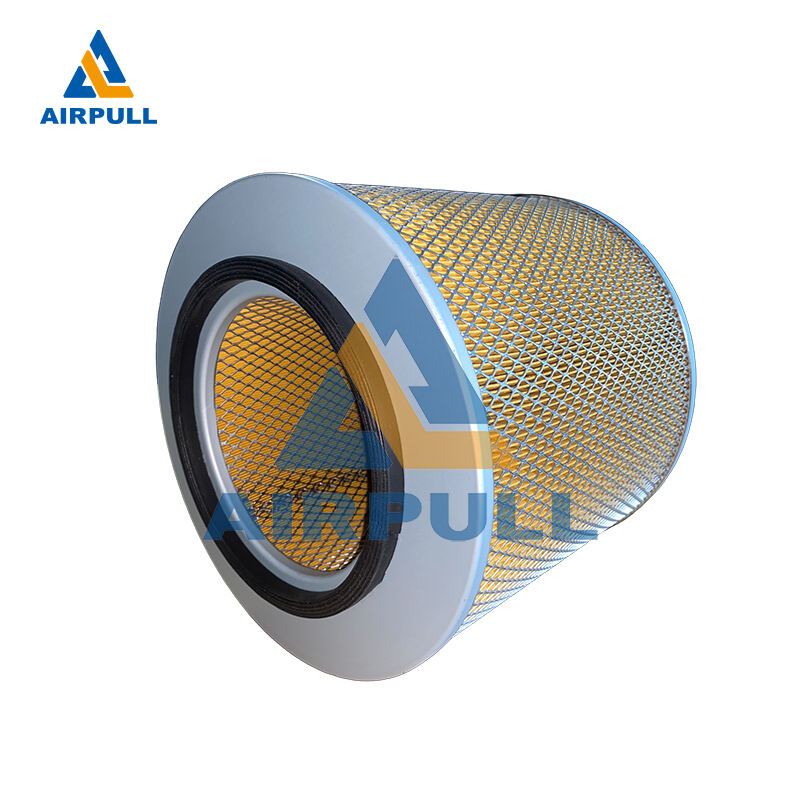
During implementation, include isolation valves, bypass logic for maintenance, and clearly marked sampling ports. These details allow validation without interrupting production and support cleaner troubleshooting records. Teams upgrading legacy lines often source replacement-grade elements such as compressed air filtration system components that match required operating envelopes. Fit, sealing integrity, and verified rating alignment remain critical to overall performance.
Plan Lifecycle Control, Monitoring, and Continuous Optimization
Set maintenance intervals by condition, not calendar alone
A high-performing compressed air filtration system requires maintenance logic tied to operating condition rather than fixed calendar intervals alone. Element life depends on contamination loading, run hours, and moisture events, which vary significantly by process profile. Differential pressure tracking, dew point trends, and periodic air testing provide better replacement timing than date-based routines. This keeps the compressed air filtration system stable while avoiding premature part consumption.
Maintenance procedures should define startup checks, drain verification, seal inspection, and post-change validation steps. Skipping these controls can introduce leaks or bypass paths that are difficult to detect quickly. In industrial settings, a disciplined compressed air filtration system program is as much about method as it is about hardware quality. Documented procedures reduce variability across maintenance teams and shifts.
Use performance data to improve efficiency and reliability
Optimization of a compressed air filtration system is an ongoing operational practice. Plants that trend pressure drop across stages, monitor condensate behavior, and correlate air quality with product outcomes identify weak points earlier. Small adjustments in setpoints, drain reliability, or filter staging can produce meaningful gains in uptime and energy performance. Over time, this turns the compressed air filtration system into a controlled utility rather than a recurring uncertainty.
For expansion projects, reuse historical filtration data to predict future loading and validate design margins before demand rises. This helps avoid repeating legacy mistakes such as oversized central units with inadequate branch polishing. A mature compressed air filtration system strategy combines design intent, operating evidence, and periodic review. That closed loop supports stronger reliability and better cost control across the full asset lifecycle.
FAQ
How early should a compressed air filtration system be designed in a new facility project?
A compressed air filtration system should be designed during utility planning, before final equipment layout is frozen. Early design allows proper sizing, drainage strategy, and branch-level protection for sensitive processes. Late-stage additions often create avoidable pressure losses and installation constraints. Early integration also improves commissioning quality and documentation.
Can one compressed air filtration system specification serve every production area?
In most industrial facilities, one uniform compressed air filtration system specification is inefficient. Different applications carry different contamination tolerance, so branch-level refinement is usually needed. A tiered approach balances cost and quality by aligning filtration depth with process sensitivity. This reduces both over-filtration expense and under-filtration risk.
What is the most common design mistake in a compressed air filtration system?
The most common mistake is selecting filter grades without validating system-wide pressure-drop behavior under peak load. A compressed air filtration system may look correct on paper yet fail when real demand rises. Ignoring moisture management and separator-dryer coordination is another frequent issue. Both mistakes shorten element life and destabilize air quality.
How can teams verify that a compressed air filtration system is still performing as designed?
Verification should combine differential pressure trending, periodic air quality sampling, dew point checks, and maintenance record review. A compressed air filtration system that is performing well will show stable pressure behavior and predictable service intervals. Sudden deviations usually indicate upstream contamination shifts or component wear. Routine validation keeps performance aligned with the original design intent.
Table of Contents
- Define Air Quality Requirements Before Selecting Hardware
- Build the Filtration Sequence in the Correct Order
- Engineer Layout, Sizing, and Validation for Plant Conditions
- Plan Lifecycle Control, Monitoring, and Continuous Optimization
-
FAQ
- How early should a compressed air filtration system be designed in a new facility project?
- Can one compressed air filtration system specification serve every production area?
- What is the most common design mistake in a compressed air filtration system?
- How can teams verify that a compressed air filtration system is still performing as designed?