EN
EN



In industrial production, dust control is not just a housekeeping issue; it directly affects equipment uptime, product quality, worker safety, and compliance performance. The core mechanism behind a self cleaning air filter for dust removal is continuous filtration combined with periodic in-place cleaning, so airflow remains stable while dust is discharged without manual teardown. This design is widely used where dust loads change throughout the day and where shutdowns are expensive. Understanding how a self cleaning air filter for dust removal works helps engineering teams choose the right operating window and avoid avoidable pressure-drop failures.
At a practical level, a self cleaning air filter for dust removal follows a repeating sequence: capture particles on filter media, monitor resistance rise, trigger cleaning pulses, release accumulated dust, and return to steady filtration. The process is automatic, fast, and synchronized with process airflow demand. A properly configured self cleaning air filter for dust removal can maintain predictable differential pressure and reduce maintenance labor in high-dust environments. That is why process engineers treat the cleaning cycle logic as seriously as the filter media specification itself.
Operating Principle of Continuous Filtration and Automatic Cleaning
Airflow entry, particle capture, and clean-air delivery
The first stage of a self cleaning air filter for dust removal is directed intake airflow through a housing that promotes even distribution across the filter surface. As air passes through the media, suspended solids are trapped by interception, inertial impact, and surface loading effects. Cleaned air exits downstream to protect blowers, compressors, burners, or sensitive process zones. This baseline filtration function is what gives a self cleaning air filter for dust removal its immediate operational value.
Unlike disposable systems that rely on full element replacement when resistance rises, a self cleaning air filter for dust removal is designed to hold dust temporarily and then release it through an on-line cleaning action. The captured layer can even improve fine-particle capture during stable loading periods, as long as pressure drop remains within control limits. Because the unit continues filtering during normal operation, process continuity is preserved. In heavy-duty production, this continuity is often the deciding reason to adopt a self cleaning air filter for dust removal.
Dust cake formation and the trigger for cleaning action
As particles accumulate, the filter develops a dust cake that increases flow resistance. Every self cleaning air filter for dust removal therefore depends on differential pressure sensing to detect when the media is approaching a threshold that could reduce air volume or increase fan energy demand. Once the preset value is reached, the cleaning controller activates a short pulse sequence to dislodge the loaded layer. This is the transition point where the system shifts from capture mode to regeneration mode.
The cleaning event is brief but precisely timed. In most designs, compressed air or reverse-flow energy creates a rapid pressure wave that flexes the media and breaks dust adhesion. The detached particles fall into a hopper or dust collection chamber for controlled discharge. After this event, the self cleaning air filter for dust removal returns to low-resistance filtration, and the cycle repeats as process conditions evolve.
Filtration Cycle Sequence in Real Industrial Conditions
Steady-state operation under variable dust loading
Real factories do not run at constant dust concentration, so a self cleaning air filter for dust removal must remain stable through load swings caused by material changeovers, startup events, and shift-based process variation. During lower dust periods, cleaning intervals naturally widen because pressure builds slowly. During peak dust generation, cleaning frequency increases to protect throughput. This adaptive behavior is central to how a self cleaning air filter for dust removal works in practice, not only in laboratory conditions.
A well-tuned unit balances filtration efficiency with manageable pressure drop. If cleaning starts too early, compressed-air consumption rises and media wear can accelerate. If cleaning starts too late, airflow stability suffers and upstream process equipment may experience stress. The right control window allows the self cleaning air filter for dust removal to maintain predictable suction or supply performance while avoiding unnecessary cleaning energy.
Pulse cleaning mechanics and dust discharge path
During regeneration, pulse valves open in sequence so one section is cleaned while other sections continue filtering, which preserves overall system continuity. This segmented approach is common in multi-cartridge and multi-bag configurations of a self cleaning air filter for dust removal. The pulse duration, pressure, and interval are selected to detach dust effectively without damaging media structure. Effective detachment is measured by pressure-drop recovery after each pulse event.
Once released, dust must move efficiently away from the filtration zone. Hopper geometry, discharge valves, and downstream handling influence whether re-entrainment occurs. A self cleaning air filter for dust removal performs best when dust leaves the chamber quickly and does not circulate back to the media face. This is why mechanical design and cleaning control are inseparable when evaluating long-term filtration stability.
Control Logic, Key Parameters, and Performance Stability
Differential pressure setpoints and cleaning strategy
The control core of a self cleaning air filter for dust removal is usually a differential pressure band with upper and lower limits. The upper limit initiates cleaning, and the lower limit indicates sufficient recovery. Engineers tune this band according to dust type, target airflow, and media characteristics. Stable tuning prevents oscillation and keeps the self cleaning air filter for dust removal working in an efficient operating envelope.
Time-based backup logic is often added so cleaning still occurs if sensors drift or loading is uneven. In demanding sites, hybrid control using pressure plus timed intervals gives better reliability than single-mode triggering. When configured correctly, a self cleaning air filter for dust removal maintains process air quality without over-cleaning. This directly supports lower operating cost and steadier production output.
Media behavior, air quality goals, and energy impact
Media selection strongly shapes how a self cleaning air filter for dust removal performs over time. Fiber structure, surface treatment, and permeability affect particle capture, pulse release behavior, and residual pressure drop. Fine dust with sticky characteristics may require a media finish that improves cake release during pulse events. Coarse dry dust may favor different permeability to keep fan load low.
Energy use is tied to both fan power and cleaning-air consumption. If resistance stays low and recovery after cleaning is consistent, the self cleaning air filter for dust removal reduces the risk of hidden energy penalties from overloaded fans. If pulse settings are excessive, compressed-air cost rises and maintenance intervals may shorten. Performance optimization therefore means tuning the whole system, not only selecting a filter element.
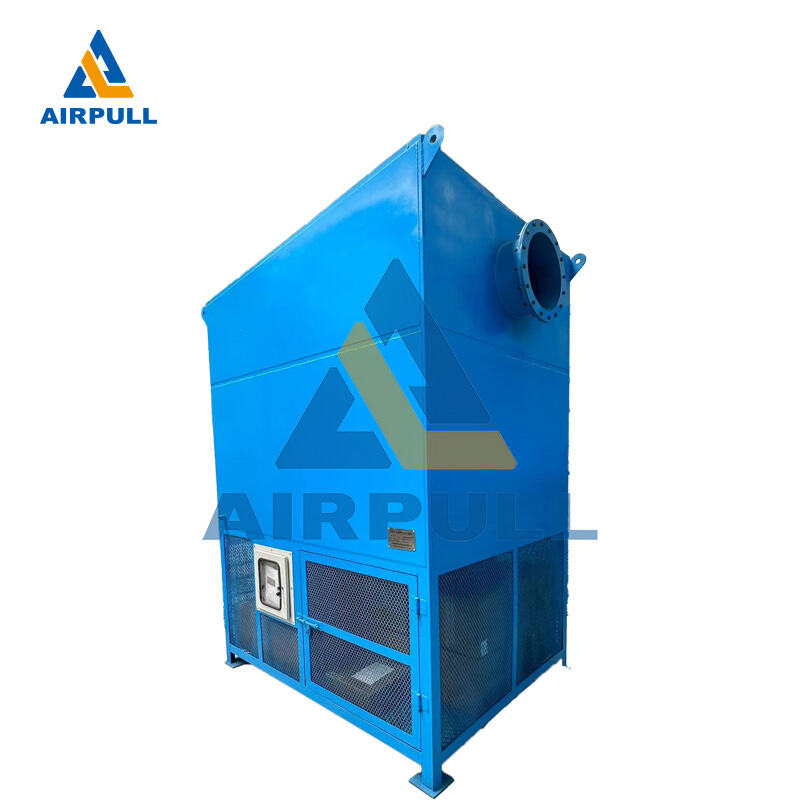
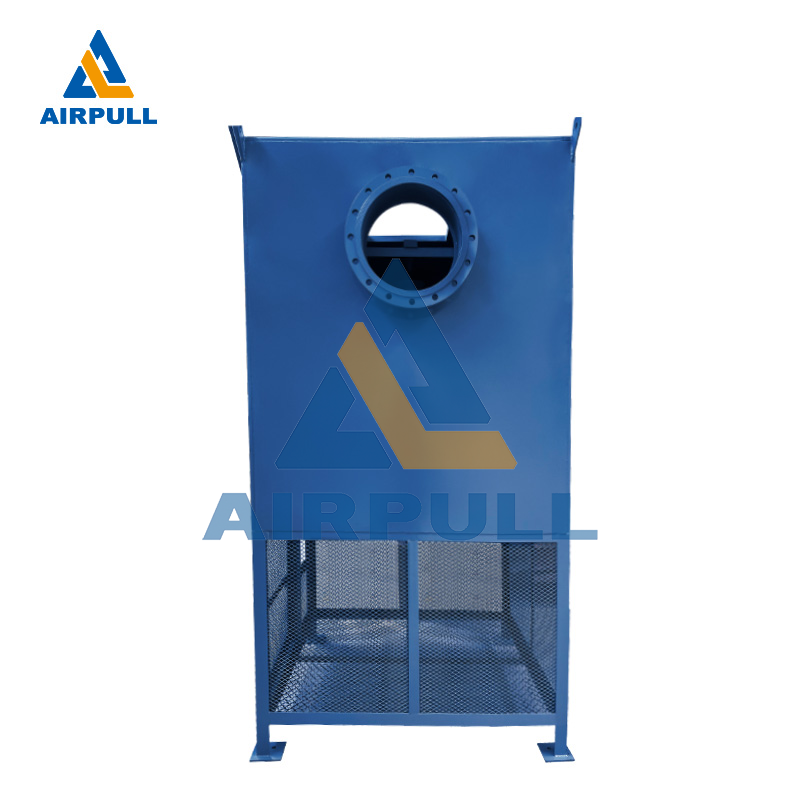
For teams evaluating deployment details, this self cleaning air filter for dust removal example reflects the type of integrated design where housing, media, and control logic are aligned for continuous industrial duty. The key is matching design assumptions to actual dust profile and airflow targets on site. A design that performs well under real process variability delivers better lifecycle outcomes than one optimized only for nameplate conditions.
Implementation Workflow for Industrial Plants
Site assessment, sizing logic, and integration points
Implementation starts with a dust and airflow survey that maps source points, concentration patterns, and operating hours. This defines required face velocity, expected loading, and cleaning frequency for a self cleaning air filter for dust removal. Correct sizing avoids two common failures: excessive velocity that forces frequent cleaning, and oversized housings that increase footprint without improving control. Integration planning should also include fan curves and pressure budget across the full duct path.
Process integration requires attention to inlet distribution and maintenance access. Even high-quality equipment can underperform if airflow enters unevenly or if discharge points promote dust build-up. A self cleaning air filter for dust removal should be positioned to support smooth duct transitions and safe dust handling routines. Good installation practice often determines whether theoretical filtration performance becomes repeatable plant performance.
Commissioning, monitoring, and long-term reliability
Commissioning verifies sensor calibration, pulse sequence timing, valve response, and baseline pressure readings at defined airflow rates. These initial values become the reference for ongoing diagnostics of the self cleaning air filter for dust removal. Early trending can reveal issues such as moisture-driven dust agglomeration, compressed-air instability, or uneven loading across filter sections. Fast correction at this stage protects both media life and process continuity.
Long-term reliability depends on disciplined monitoring rather than reactive troubleshooting. Tracking differential pressure trend shape, not just peak value, helps maintenance teams identify gradual deterioration before it becomes downtime. With this approach, a self cleaning air filter for dust removal remains a predictable process asset instead of a periodic bottleneck. Over time, consistent control of dust and airflow supports safer operations and more stable production quality.
FAQ
How often does a self cleaning air filter for dust removal clean itself during operation?
Cleaning frequency depends on dust concentration, particle behavior, airflow demand, and differential pressure setpoints. In high-load periods, a self cleaning air filter for dust removal may pulse frequently to keep resistance inside the target band. In lighter-load periods, intervals naturally extend. The important point is that cleaning is demand-driven, so the system responds to real operating conditions.
Can a self cleaning air filter for dust removal handle fine and coarse dust in the same facility?
Yes, but performance depends on media selection and control tuning. A self cleaning air filter for dust removal can manage mixed dust profiles when the filter media supports both efficient capture and effective pulse release. Facilities with changing materials should validate setpoints and pulse parameters during commissioning. Stable results come from matching media behavior to actual dust characteristics.
What is the main difference between manual replacement filters and a self cleaning air filter for dust removal?
Manual systems usually require shutdown or major intervention when pressure drop rises, while a self cleaning air filter for dust removal regenerates the media in place during operation. This reduces unplanned stoppages and helps keep airflow consistent across shifts. It also shifts maintenance from emergency replacement to planned monitoring. For many industrial lines, that change improves both reliability and labor efficiency.
Does a self cleaning air filter for dust removal eliminate all maintenance work?
No filtration system is maintenance-free. A self cleaning air filter for dust removal reduces manual cleaning and replacement frequency, but it still needs periodic checks of sensors, pulse valves, compressed-air quality, and dust discharge components. Regular inspection keeps the cleaning cycle effective and prevents gradual performance loss. The value is lower intervention intensity, not zero maintenance.
Table of Contents
- Operating Principle of Continuous Filtration and Automatic Cleaning
- Filtration Cycle Sequence in Real Industrial Conditions
- Control Logic, Key Parameters, and Performance Stability
- Implementation Workflow for Industrial Plants
-
FAQ
- How often does a self cleaning air filter for dust removal clean itself during operation?
- Can a self cleaning air filter for dust removal handle fine and coarse dust in the same facility?
- What is the main difference between manual replacement filters and a self cleaning air filter for dust removal?
- Does a self cleaning air filter for dust removal eliminate all maintenance work?