EN
EN


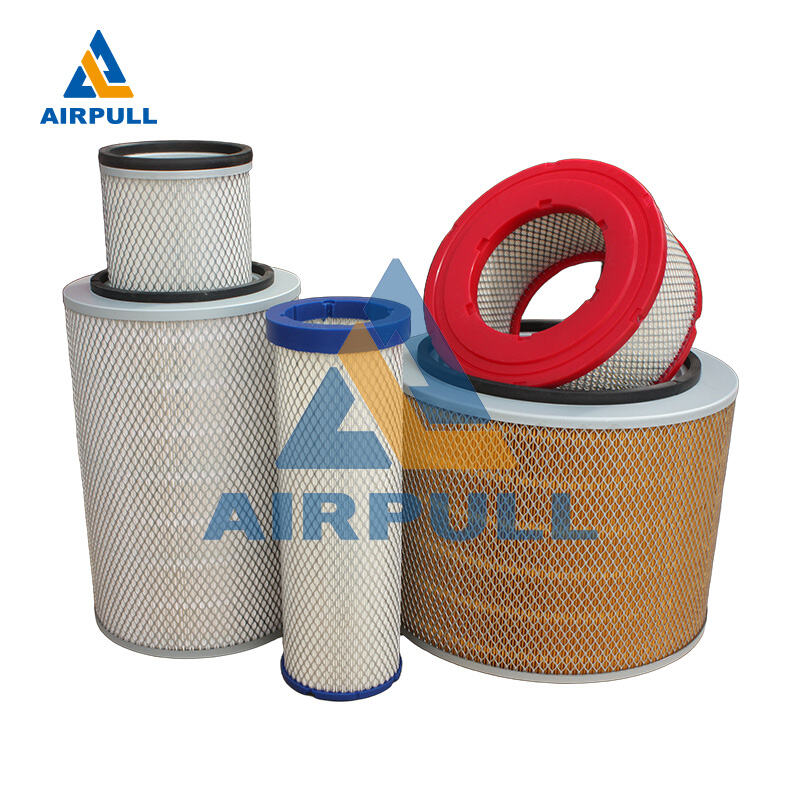
Choosing the right filter element supplier is one of the most consequential decisions an industrial procurement team can make. Filter elements sit at the heart of compressed air systems, hydraulic circuits, and process equipment — and when they fail, the downstream impact extends far beyond a single component. Downtime, contaminated output, damaged equipment, and voided warranties are all on the table when filtration quality falls short. The difference between a reliable filter element supplier and a problematic one is not always obvious from a catalog page, which is exactly why this topic deserves a thorough examination.
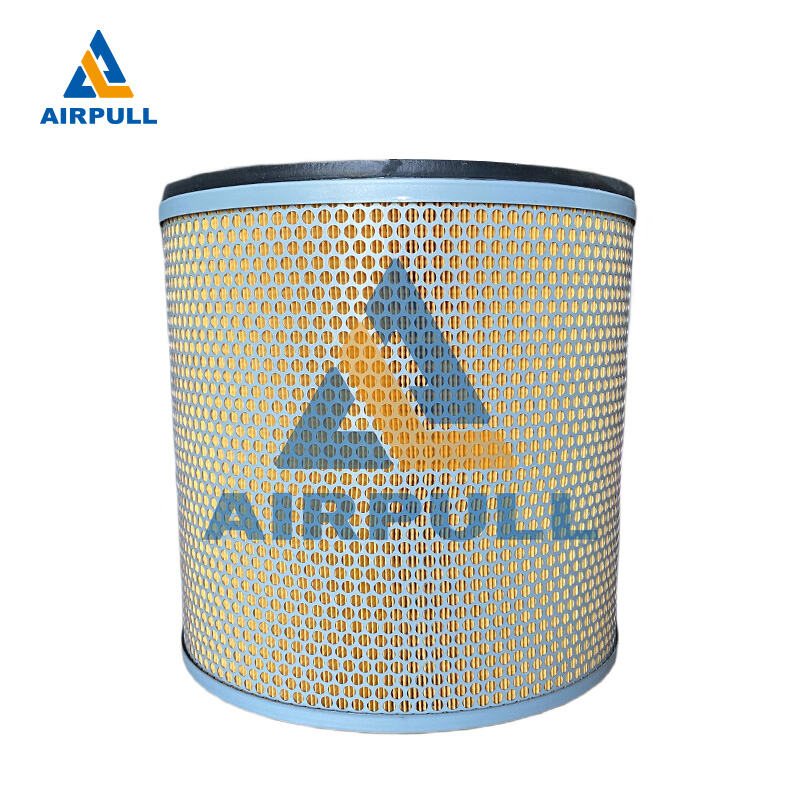
This article is designed to help procurement managers, maintenance engineers, and operations leaders develop a practical framework for evaluating any filter element supplier they encounter. Rather than naming names, the focus here is on the attributes, behaviors, and evidence that separate best-in-class suppliers from those that consistently underdeliver. By the end, you will have a clear picture of what a high-quality filter element supplier looks like in practice — and the warning signs that should send you looking elsewhere.
What Defines a High-Quality Filter Element Supplier
Manufacturing Depth and Process Control
The most dependable filter element supplier is one that controls the manufacturing process rather than simply assembling purchased components. Suppliers with in-house production capabilities — including filter media manufacturing, end cap bonding, and quality testing — have far greater visibility into product consistency. When something goes wrong on a production run, an integrated manufacturer can isolate and resolve the issue quickly. A supplier that relies entirely on third-party components has limited ability to guarantee repeatability.
Process control manifests in measurable ways. Look for suppliers who can share documented process specifications, machine maintenance logs, and first-article inspection data. These are signs that quality is engineered into production rather than inspected at the end. A serious filter element supplier does not simply test finished products — it manages every upstream variable that determines output quality. Suppliers who struggle to provide this kind of transparency are likely operating with less control than they admit.
The type of filter media used is another critical dimension. A strong filter element supplier uses media that meets recognized standards for particle retention, airflow resistance, and structural integrity. Whether the element is designed for compressed air, oil mist separation, or coalescing applications, the underlying media grade must match the specification. Suppliers who are vague about media sourcing or cannot provide independent material certifications deserve scrutiny.
Technical Documentation and Application Support
A capable filter element supplier provides more than just a product — it provides engineering confidence. That means detailed datasheets, dimensional drawings, material compatibility charts, and application guidance. When a maintenance engineer is deciding whether a filter element is suitable for a specific compressor model, they need accurate data, not just a part number and a price. A supplier who cannot furnish this documentation is not positioned to support professional industrial operations.
Application support goes beyond paperwork. A qualified filter element supplier should be able to recommend the correct filter rating for a given duty cycle, explain the trade-offs between filtration efficiency and pressure drop, and flag compatibility risks between their element and the housing it serves. This kind of technical engagement is a strong signal of genuine product expertise. Suppliers who default to generic answers or simply confirm that they can match any specification on request often lack the engineering foundation to back those claims.
Red Flags That Identify a Poor Filter Element Supplier
Inconsistent Product Quality Across Batches
Batch-to-batch inconsistency is one of the most destructive problems a filter element supplier can introduce into an operation. If an element performs well in one shipment and underperforms in the next, the maintenance team loses the ability to plan predictively. Scheduled replacements become unreliable, and early failures begin to increase. The root cause of batch inconsistency is almost always inadequate process control — either in media sourcing, bonding procedures, or final inspection protocols.
Procurement teams that work with a problematic filter element supplier often describe a pattern: initial samples pass all acceptance tests, but production batches show dimensional variance, premature collapse under pressure, or higher-than-specified differential pressure at rated flow. These are not random occurrences — they are symptoms of a supplier whose production system lacks the controls needed for industrial-grade repeatability. If a supplier cannot explain and correct batch variation, it is a fundamental disqualifier.
Poor Lead Time Management and Communication
In industrial operations, lead time reliability is almost as important as product quality. A filter element supplier who quotes delivery timelines inconsistently, regularly misses promised ship dates, or provides poor communication when delays occur creates real operational risk. Maintenance departments depend on scheduled parts availability to align filter replacements with planned downtime windows. When a supplier misses those windows, the maintenance event may have to be deferred — and deferred maintenance means continued operation of degraded filtration.
The warning signs in this area often appear early in the supplier relationship. If an initial inquiry receives slow, vague, or contradictory responses, that communication pattern tends to persist. A serious filter element supplier treats logistics as a core service commitment and maintains clear order-tracking capabilities. Suppliers who treat delivery timelines as suggestions, or who consistently blame logistics partners without taking ownership, signal a fundamental gap in operational discipline.
Price-First Positioning Without Quality Evidence
There is a category of filter element supplier that competes almost entirely on price, with limited ability or willingness to support quality verification. These suppliers often provide low-cost elements with thin documentation, minimal certifications, and no established testing protocols. While the unit price may appear attractive, the total cost picture changes quickly once early failures, increased maintenance labor, and equipment damage are factored in.
A responsible filter element supplier can explain how their pricing reflects material quality, manufacturing investment, and quality assurance overhead. They can also articulate where they compete on value rather than price alone. When a supplier cannot substantiate their pricing with quality evidence — or when their pricing seems implausibly low relative to industry norms — it is reasonable to question whether corners are being cut somewhere in the production process.
How to Evaluate a Filter Element Supplier Before Committing
Requesting Certifications and Test Reports
A thorough evaluation of any filter element supplier begins with documentation requests. Ask for ISO 9001 certification, product-level test reports such as ISO 12500 or ISO 8573, and dimensional inspection reports for your specific part numbers. A credible supplier will provide these without resistance and will be able to explain what each document demonstrates. Suppliers who deflect, provide generic certificates unrelated to specific products, or claim certifications they cannot substantiate are displaying a serious red flag.
Beyond certifications, request a sample lot with full traceability documentation — including batch number, production date, and inspection sign-off. Evaluate the sample against your own incoming inspection criteria: dimensional conformance, visual quality of end caps and seam bonds, media integrity, and collapse resistance. A confident filter element supplier will welcome this scrutiny because it demonstrates their product's ability to perform under professional evaluation.
Conducting a Supplier Audit or Factory Visit
For high-volume or critical applications, a factory audit is one of the most reliable evaluation tools available. Visiting a filter element supplier's production facility allows you to verify the quality claims made in their commercial materials against operational reality. You can observe media handling procedures, bonding equipment, and final testing setups. You can ask about rejection rates, corrective action procedures, and how non-conformances are tracked and resolved.
Even a brief virtual audit — where the supplier walks you through their facility via video — reveals more than a brochure ever can. A supplier confident in their operations will embrace this process. One that is evasive, slow to arrange a visit, or who stages the facility to obscure normal production conditions is likely managing something they prefer you not to see. The willingness to be audited is itself a quality signal from a filter element supplier.
Building a Long-Term Relationship With the Right Supplier
Aligning on Total Cost of Ownership
The best procurement decisions are made on a total cost of ownership basis, not unit price alone. A high-quality filter element supplier contributes positively to total cost by delivering consistent product life, reducing unplanned maintenance events, and enabling accurate replacement scheduling. When filter elements consistently meet their rated service life, maintenance labor and parts inventory overhead both decrease. The compressor or system downstream also operates at designed efficiency levels, reducing energy consumption and wear on related components.
By contrast, a filter element supplier delivering inconsistent or substandard elements drives hidden costs upward across the board. Shorter-than-expected element life increases replacement frequency and labor costs. Bypass events or filtration failures can damage downstream equipment, generating repair or replacement costs that dwarf the original savings on filter price. Presenting this total cost argument internally is often the most effective way to justify selecting a higher-quality filter element supplier over a lower-cost but less reliable alternative.
Developing Supplier Performance Metrics
Once a filter element supplier has been qualified and brought into regular supply, the relationship should be managed with clear performance metrics. These typically include on-time delivery rate, incoming inspection pass rate, field failure rate, and responsiveness to quality issues. Establishing these metrics and reviewing them with the supplier on a regular basis creates a foundation for continuous improvement and early problem identification.
A supplier who welcomes performance reviews and takes non-conformance reports seriously is demonstrating the kind of accountability that supports a durable supply relationship. A filter element supplier who becomes defensive about quality data, attributes failures to customer handling, or fails to close corrective action loops on time is showing that their commitment to quality is conditional. These patterns, if unaddressed, tend to worsen over time rather than resolve on their own.
FAQ
What is the most important factor when selecting a filter element supplier?
Consistency is arguably the most critical factor. A filter element supplier must deliver the same product quality batch after batch, not just on initial samples. This consistency depends on strong process control, documented manufacturing standards, and rigorous quality inspection. Without it, all other attributes — price, delivery, technical support — lose much of their value because you cannot rely on what you receive.
How can I verify that a filter element supplier's certifications are legitimate?
Always request original certificate documents rather than scanned images and verify the certifying body directly. For ISO 9001 certification, most accredited certification bodies maintain a public registry where you can confirm the certificate holder, scope, and validity period. For product-level test reports, ask the filter element supplier to provide the testing laboratory name and report number so you can request independent verification if needed.
Is it advisable to use multiple filter element suppliers for the same application?
Dual-sourcing can reduce supply chain risk, but it introduces complexity in quality management. If you use two sources for the same filter element, both must be independently qualified against your performance specifications. Mixing elements of different quality levels in the same system can produce unpredictable results and makes root cause analysis of any failures significantly more difficult. The decision to dual-source should be made deliberately, with a qualified filter element supplier as the primary source.
What are the consequences of using filter elements from an unqualified supplier?
Using elements from an unqualified filter element supplier carries several serious risks. Filter elements that fail to meet their rated efficiency allow contaminants to pass downstream, potentially damaging compressors, pneumatic tools, and process equipment. Elements that collapse under pressure can block flow entirely, causing system shutdowns. Beyond direct equipment damage, using non-certified parts may void manufacturer warranties on the host equipment, creating significant financial exposure.
Table of Contents
- What Defines a High-Quality Filter Element Supplier
- Red Flags That Identify a Poor Filter Element Supplier
- How to Evaluate a Filter Element Supplier Before Committing
- Building a Long-Term Relationship With the Right Supplier
-
FAQ
- What is the most important factor when selecting a filter element supplier?
- How can I verify that a filter element supplier's certifications are legitimate?
- Is it advisable to use multiple filter element suppliers for the same application?
- What are the consequences of using filter elements from an unqualified supplier?