EN
EN




Filter element efficiency ratings represent the cornerstone of filtration performance measurement, determining how effectively a filter element removes contaminants from air, water, or other fluids passing through industrial systems. These ratings provide critical information that enables engineers, maintenance professionals, and procurement specialists to select appropriate filtration solutions for their specific applications. Understanding these efficiency metrics becomes essential when evaluating filter element performance across different operating conditions and contamination levels.
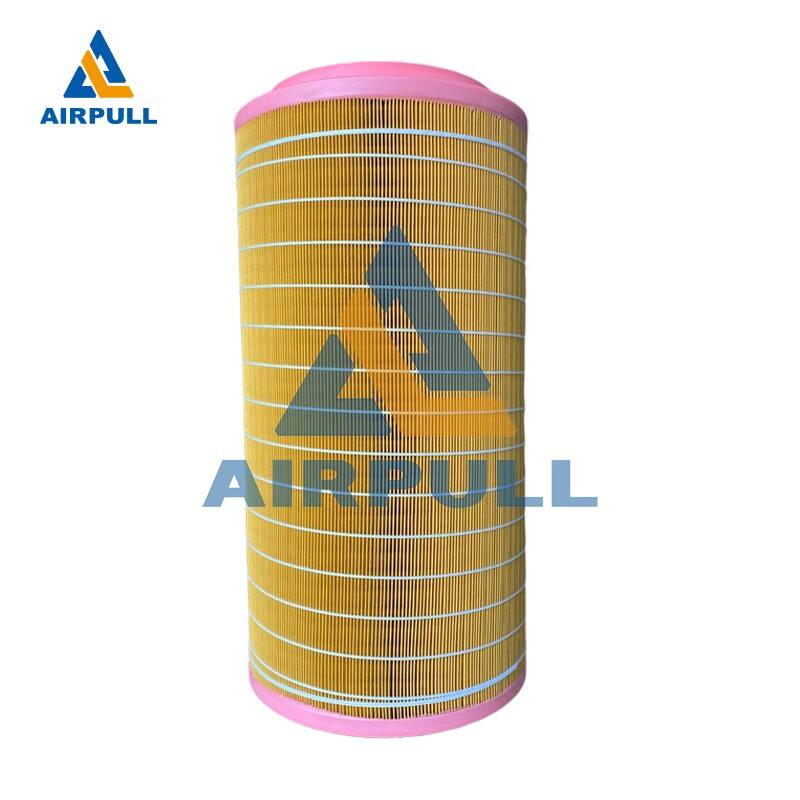
The complexity of filter element efficiency ratings extends beyond simple percentage values, encompassing multiple testing standards, particle size distributions, and real-world operating variables that significantly impact filtration performance. Modern industrial applications demand precise understanding of these ratings to ensure equipment protection, process reliability, and compliance with stringent quality standards. Proper interpretation of efficiency ratings directly influences system longevity, operational costs, and product quality outcomes.
Fundamentals of Filter Element Efficiency Measurement
Testing Standards and Methodologies
Filter element efficiency testing follows established international standards that ensure consistency and reliability across different manufacturers and applications. The most widely recognized standards include ISO 16890 for general ventilation filters, ASHRAE 52.2 for HVAC applications, and EN 779 for particulate air filters. These standards define specific test conditions, particle size distributions, and measurement protocols that determine how efficiently a filter element captures particles of various sizes.
Laboratory testing typically involves controlled environments where standardized test dust or synthetic aerosols are introduced upstream of the filter element. Particle counters measure concentrations before and after the filter, calculating efficiency percentages across different particle size ranges. The testing process accounts for factors such as airflow velocity, loading conditions, and environmental variables that affect real-world performance. Understanding these methodologies helps interpret efficiency ratings within proper context.
Different testing approaches yield varying efficiency values for the same filter element, making it crucial to understand which standard applies to specific ratings. Gravimetric efficiency measures total mass removal, while particle counting efficiency focuses on numerical particle reduction. Optical particle counters provide detailed size-specific data, enabling precise efficiency calculations across the entire particle spectrum relevant to industrial applications.
Particle Size Distribution Impact
The relationship between particle size and filter element efficiency follows predictable patterns that directly influence rating interpretation. Most filtration mechanisms exhibit varying effectiveness across different particle size ranges, creating characteristic efficiency curves that reveal optimal performance zones. Submicron particles often present the greatest challenge, requiring specialized filter element designs to achieve high efficiency ratings in critical applications.
Mechanical filtration mechanisms such as impaction, interception, and diffusion operate with different effectiveness depending on particle size and filter element construction. Larger particles are typically captured through inertial impaction, while smaller particles rely on Brownian motion and electrostatic attraction. The most penetrating particle size (MPPS) represents the diameter at which filter element efficiency reaches its minimum value, providing crucial information for application-specific selection.
Industrial contaminants rarely consist of uniform particle sizes, making it essential to understand how efficiency ratings apply to real-world particle distributions. Filter element performance against actual contamination profiles may differ significantly from laboratory test results using standardized aerosols. Comprehensive efficiency evaluation considers the complete particle size spectrum present in specific operating environments.
Classification Systems and Rating Categories
Efficiency Grade Classifications
Modern filter element classification systems organize efficiency ratings into standardized grades that simplify selection and specification processes. The ISO 16890 standard introduces ePM ratings based on particle size ranges, replacing older classification methods with more precise efficiency metrics. These grades directly correspond to filter element performance against particles in the 0.3 to 10 micron range, providing clearer guidance for application-specific requirements.
HEPA and ULPA classifications represent the highest efficiency categories, with filter element efficiency ratings of 99.97% and 99.999% respectively for 0.3 micron particles. These classifications require rigorous testing and certification processes to ensure consistent performance levels. Understanding the specific requirements and testing protocols behind each classification helps evaluate whether stated efficiency ratings meet application needs.
Industrial filter element applications often utilize intermediate efficiency grades that balance performance requirements with operational considerations such as pressure drop, service life, and cost effectiveness. These classifications typically range from coarse filtration at 60-80% efficiency to fine filtration exceeding 95% efficiency, with specific grade selection depending on contamination control requirements and system design parameters.
Application-Specific Rating Interpretations
Different industrial applications require varying approaches to interpreting filter element efficiency ratings based on specific contamination control objectives and operating conditions. Clean room environments demand ultra-high efficiency ratings with stringent particle size specifications, while general industrial applications may prioritize cost-effective filtration with moderate efficiency levels. Understanding application context becomes crucial for proper rating interpretation.
Compressed air systems present unique challenges where filter element efficiency ratings must account for varying pressure conditions, oil vapor removal, and moisture separation capabilities. Standard efficiency ratings may not fully represent performance in these specialized applications, requiring additional testing parameters and performance metrics. The interaction between different filtration stages also influences overall system efficiency beyond individual filter element ratings.
Process industries often require filter element efficiency ratings that address specific contaminants such as catalyst particles, process dust, or chemical aerosols. Generic efficiency ratings may not accurately predict performance against these specialized contaminants, necessitating application-specific testing and validation. Understanding these limitations helps establish realistic performance expectations and appropriate selection criteria.
Factors Affecting Efficiency Rating Accuracy
Operating Condition Variables
Real-world operating conditions significantly influence filter element performance compared to laboratory efficiency ratings obtained under controlled test conditions. Temperature variations affect filter media properties, particle behavior, and airflow characteristics, potentially altering efficiency performance beyond rated specifications. Humidity levels impact particle agglomeration, electrostatic effects, and filter media hygroscopicity, creating additional variables that influence actual efficiency.
Airflow velocity represents another critical variable that affects filter element efficiency ratings in practical applications. Higher velocities may reduce residence time and particle capture probability, while lower velocities can improve efficiency but potentially compromise system capacity. The relationship between flow rate and efficiency varies depending on filter element construction, media type, and particle characteristics present in specific applications.
Pressure differentials across filter elements change throughout their service life, influencing both efficiency and flow characteristics. Initial efficiency ratings typically reflect clean filter performance, while loaded conditions may exhibit different efficiency patterns. Understanding how efficiency ratings change with dust loading helps predict long-term performance and establish appropriate replacement schedules.
Installation and System Integration Factors
Proper filter element installation directly impacts achieved efficiency compared to rated performance values obtained in laboratory settings. Seal integrity, bypass prevention, and correct orientation ensure that actual filtration efficiency matches rated specifications. Poor installation practices can dramatically reduce effective efficiency regardless of filter element quality and rated performance levels.
System design considerations such as upstream air distribution, pre-filtration stages, and downstream components influence overall filtration efficiency beyond individual filter element ratings. Turbulent flow patterns, uneven loading, and inadequate pre-treatment can compromise filter element performance and reduce actual efficiency below rated values. Comprehensive system evaluation becomes necessary for accurate efficiency predictions.
Multiple filter element configurations require careful consideration of cumulative efficiency effects and potential interaction between filtration stages. Series arrangements typically improve overall efficiency but may create pressure drop concerns, while parallel configurations must account for flow distribution uniformity. Understanding these system-level effects helps optimize filter element selection and arrangement for maximum efficiency achievement.
Practical Applications of Efficiency Rating Knowledge
Selection Criteria Development
Developing appropriate filter element selection criteria requires translating efficiency ratings into practical performance requirements that align with specific application needs. This process involves analyzing contamination sources, identifying critical particle size ranges, and establishing acceptable efficiency thresholds that balance performance with operational considerations. Comprehensive criteria development considers both initial efficiency ratings and sustained performance throughout the filter element service life.
Cost-benefit analysis plays a crucial role in filter element selection, comparing higher efficiency ratings against increased initial costs, pressure drop penalties, and replacement frequency requirements. Understanding the economic implications of different efficiency levels helps optimize selection decisions based on total cost of ownership rather than simple purchase price considerations. Long-term operational savings often justify higher efficiency filter element investments.
Performance verification requirements may necessitate filter element efficiency ratings that exceed minimum application needs to ensure consistent compliance with specifications. Safety margins account for normal performance variations, aging effects, and potential operating condition changes that could impact efficiency. Establishing appropriate safety factors requires understanding both rating accuracy limitations and application criticality levels.
Performance Monitoring and Validation
Ongoing performance monitoring helps validate that actual filter element efficiency matches rated specifications under real operating conditions. Downstream particle monitoring, pressure differential tracking, and periodic efficiency testing provide data to confirm continued performance and identify potential issues before they impact system operation. Regular validation ensures that efficiency ratings remain accurate throughout the filter element service life.
Predictive maintenance strategies utilize efficiency rating knowledge combined with operating data to optimize filter element replacement schedules and minimize unexpected failures. Understanding how efficiency degrades with loading and time enables proactive replacement decisions that maintain consistent performance levels. Data-driven approaches improve both system reliability and operational efficiency while reducing maintenance costs.
Quality control programs often require documented filter element efficiency verification to ensure compliance with process requirements and regulatory standards. Establishing appropriate testing protocols and acceptance criteria based on efficiency rating knowledge helps maintain consistent product quality and regulatory compliance. Regular auditing and documentation demonstrate ongoing commitment to filtration performance excellence.
FAQ
What is the difference between initial efficiency and average efficiency ratings for filter elements?
Initial efficiency represents filter element performance when clean and new, while average efficiency accounts for performance changes as the filter loads with contaminants over its service life. Average efficiency typically provides a more realistic representation of expected performance throughout the complete operating cycle, as most filter elements experience efficiency changes during dust loading phases.
How do temperature and humidity affect filter element efficiency ratings?
Temperature variations can alter filter media properties and particle behavior, potentially changing efficiency performance compared to standard test conditions. Higher temperatures may reduce electrostatic effects and change media flexibility, while humidity affects particle agglomeration and filter media moisture content. These environmental factors can cause actual efficiency to vary from laboratory-rated values by several percentage points.
Can filter element efficiency ratings be directly compared between different testing standards?
Direct comparison of efficiency ratings between different testing standards requires careful consideration of test methodologies, particle size distributions, and measurement techniques. Standards like ISO 16890 and ASHRAE 52.2 use different approaches that may yield varying efficiency values for identical filter elements. Understanding the specific testing protocol behind each rating ensures accurate performance comparisons.
Why do some filter elements show different efficiency ratings for different particle sizes?
Filter element efficiency varies with particle size due to different capture mechanisms operating at various size ranges. Larger particles are captured through impaction and interception, while smaller particles rely on diffusion and electrostatic attraction. The most penetrating particle size represents the diameter where efficiency reaches its minimum value, creating characteristic efficiency curves that show size-dependent performance variations.
Table of Contents
- Fundamentals of Filter Element Efficiency Measurement
- Classification Systems and Rating Categories
- Factors Affecting Efficiency Rating Accuracy
- Practical Applications of Efficiency Rating Knowledge
-
FAQ
- What is the difference between initial efficiency and average efficiency ratings for filter elements?
- How do temperature and humidity affect filter element efficiency ratings?
- Can filter element efficiency ratings be directly compared between different testing standards?
- Why do some filter elements show different efficiency ratings for different particle sizes?